Why Every Data Team Must Move to Microsoft Fabric Now
Every Data Team Must Move to Microsoft Fabric Now is data teams are moving to Microsoft Fabric to replace fragmented analytics stacks with OneLake, shared governance, and faster delivery across BI, data engineering, and AI.
Learn why data teams are moving to Microsoft Fabric to replace fragmented analytics stacks with OneLake, shared governance, and faster delivery across BI, data engineering, and AI.
Al Rafay Consulting
· Updated June 7, 2026 · ARC Team

Data teams are under pressure from both sides. Business leaders want faster reporting, faster experimentation, and faster AI adoption. Meanwhile, engineering teams are still juggling disconnected ETL pipelines, separate warehouses, separate BI tools, separate governance models, and duplicated data.
That fragmented model is expensive to operate and slow to improve. Microsoft Fabric changes the operating model by bringing ingestion, engineering, warehousing, real-time analytics, and Power BI together on one SaaS platform with OneLake as the shared data foundation.
This is why more organizations are moving now instead of waiting. Microsoft Fabric is no longer just a promising concept. It has become a practical path to modernizing analytics without rebuilding everything from scratch.
Why Legacy Data Stacks Hold Teams Back
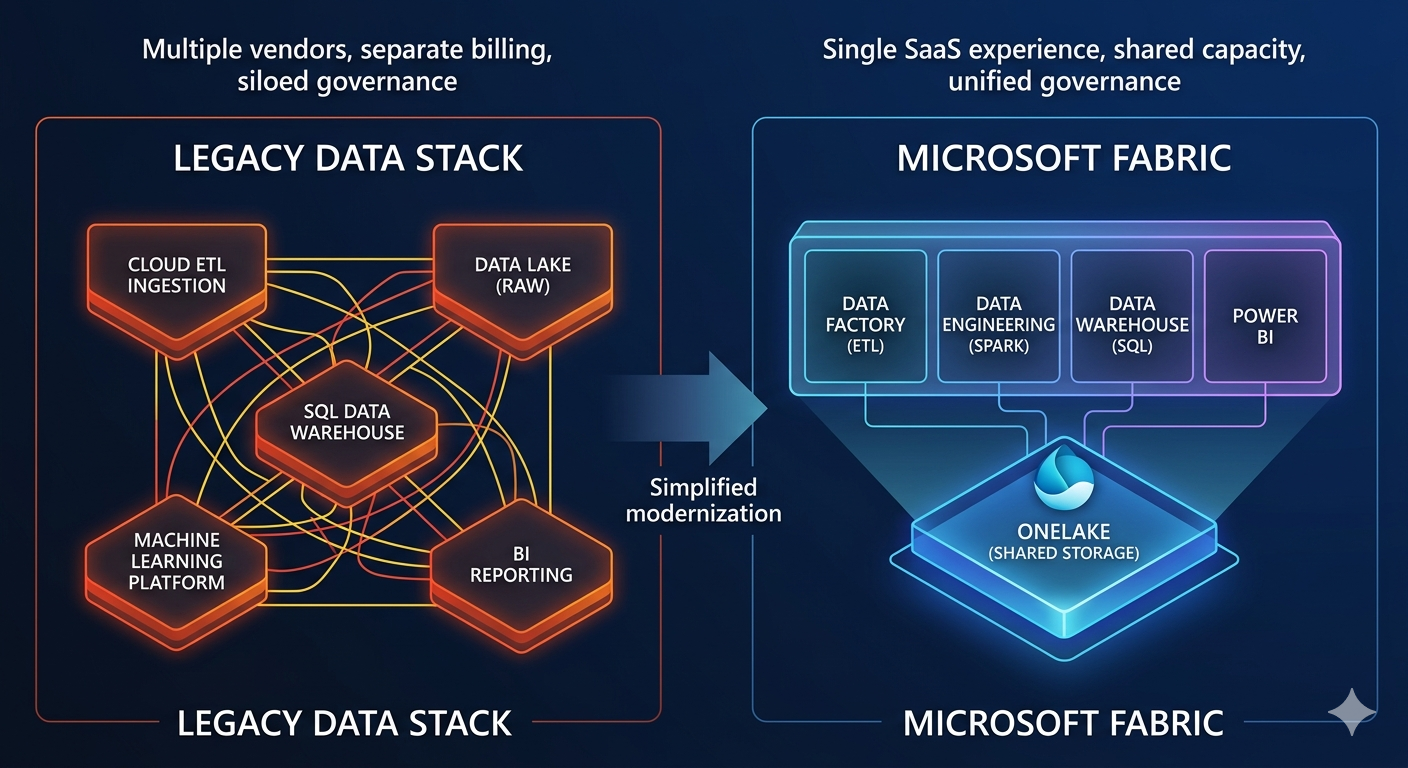
Traditional analytics environments usually grow tool by tool. One product handles ingestion, another runs transformations, another hosts warehouse workloads, another serves dashboards, and another is added later for ML or governance. Every layer adds handoffs, duplicated security models, and operational overhead.
The result is familiar:
- Slow reporting cycles because data moves through too many stages
- High infrastructure cost from duplicated storage and compute
- Siloed governance that makes trust and compliance harder
- Delayed AI adoption because usable data is not available in one place
Microsoft Fabric addresses this by consolidating the stack into one shared operating model.
What Makes Microsoft Fabric Different
Microsoft Fabric is not just another analytics tool. It is a unified SaaS data platform where multiple workloads run against the same storage foundation and governance model.
OneLake as the Shared Foundation
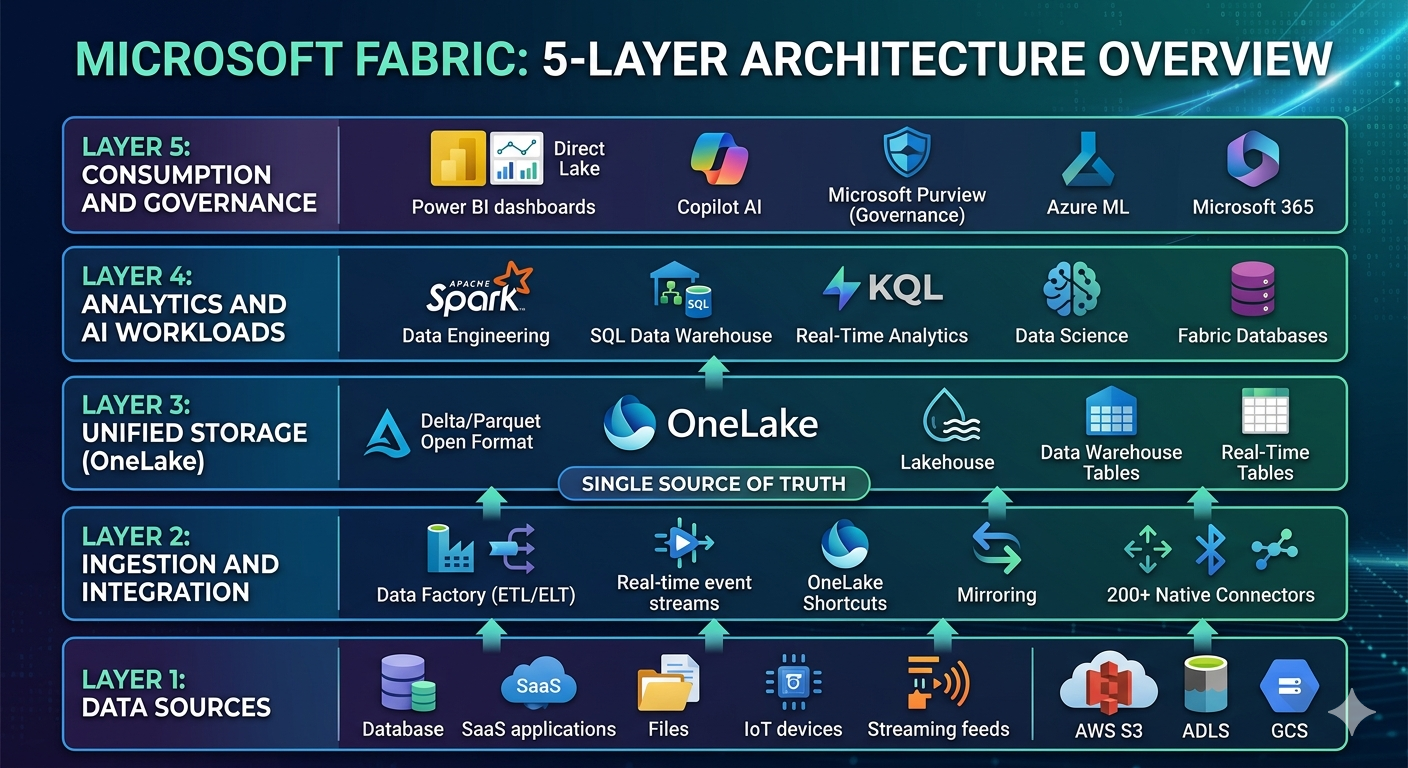
OneLake acts as the single source of truth across Fabric workloads. Instead of copying the same datasets into multiple services, teams can land data once and use it across lakehouse, warehouse, real-time analytics, and Power BI scenarios.
Shared Capacity and Governance
Fabric also changes how teams operate the platform. Shared capacity, centralized administration, Microsoft Purview integration, and common security models reduce the friction that usually appears when each team adopts a different analytics product.
One Platform for Multiple Personas
Business analysts, data engineers, BI developers, and data scientists no longer have to work across disconnected tools. The platform brings together:
- Data Factory for ingestion and orchestration
- Spark-based Data Engineering
- SQL Data Warehouse workloads
- Real-Time Analytics
- Power BI reporting and semantic models
- Copilot-assisted workflows and AI-ready data patterns
Why Data Teams Are Moving Now
The business case is no longer theoretical. Fabric gives data teams a way to simplify modernization and improve delivery speed without maintaining a patchwork of tools.
Some of the strongest reasons to move now include:
- Simpler modernization: Existing warehouse, lake, and BI patterns can be rationalized instead of endlessly extended.
- Faster delivery: Direct Lake, shared storage, and integrated Power BI reduce the lag between ingestion and reporting.
- Lower operational complexity: One governance and administration model replaces several overlapping ones.
- Better AI readiness: Data is easier to govern, discover, and use for copilots, ML, and intelligent applications.
Organizations adopting Fabric early are building the data foundation required for enterprise AI, not just dashboard modernization.
Real-World Use Cases That Show Fabric’s Value
Fabric is compelling because it supports business outcomes, not just architecture diagrams.
| Use Case | Fabric Pattern | Business Outcome |
|---|---|---|
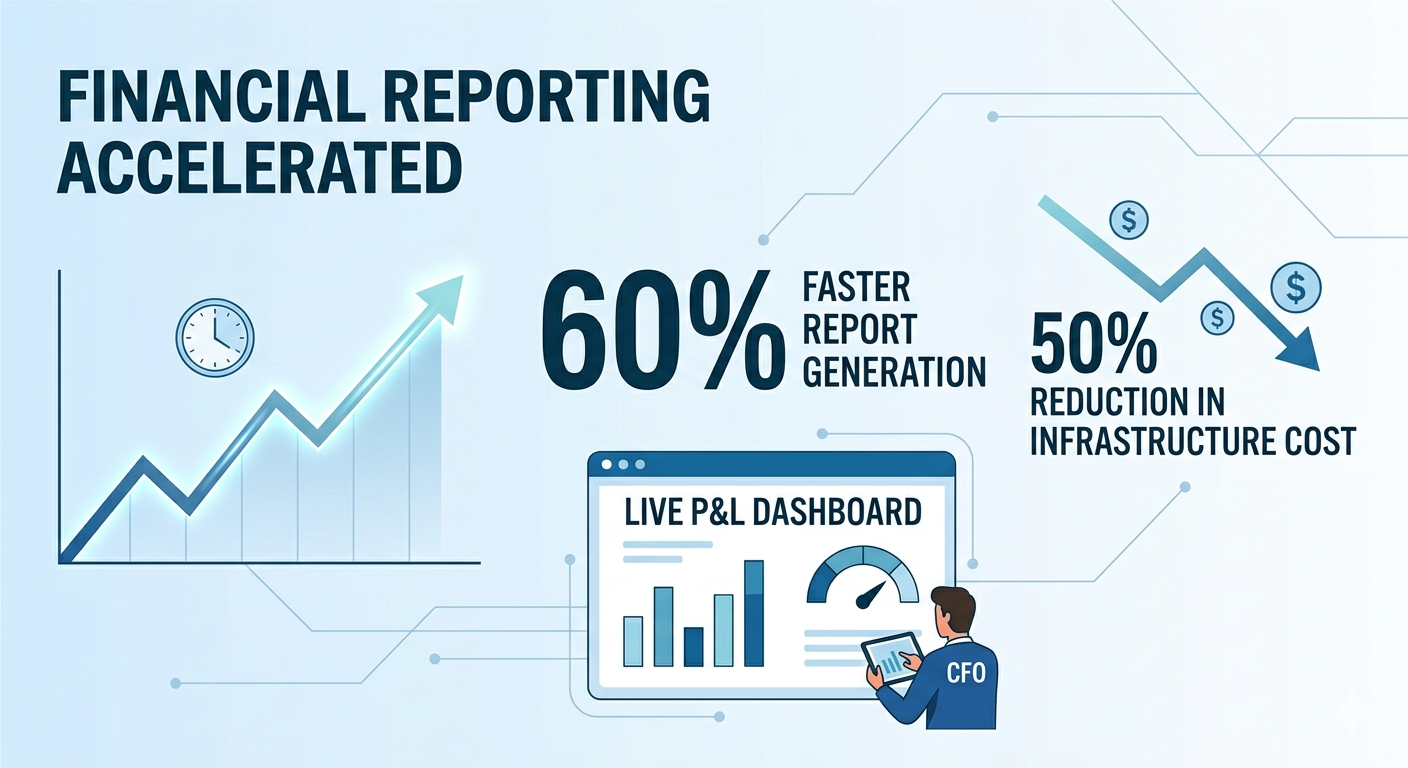
| Financial reporting acceleration | Shared lakehouse + Power BI + warehouse | Faster close cycles and lower infrastructure overhead |
| Healthcare compliance and audit readiness | Purview governance + lineage + centralized storage | Better traceability and reduced audit preparation effort |
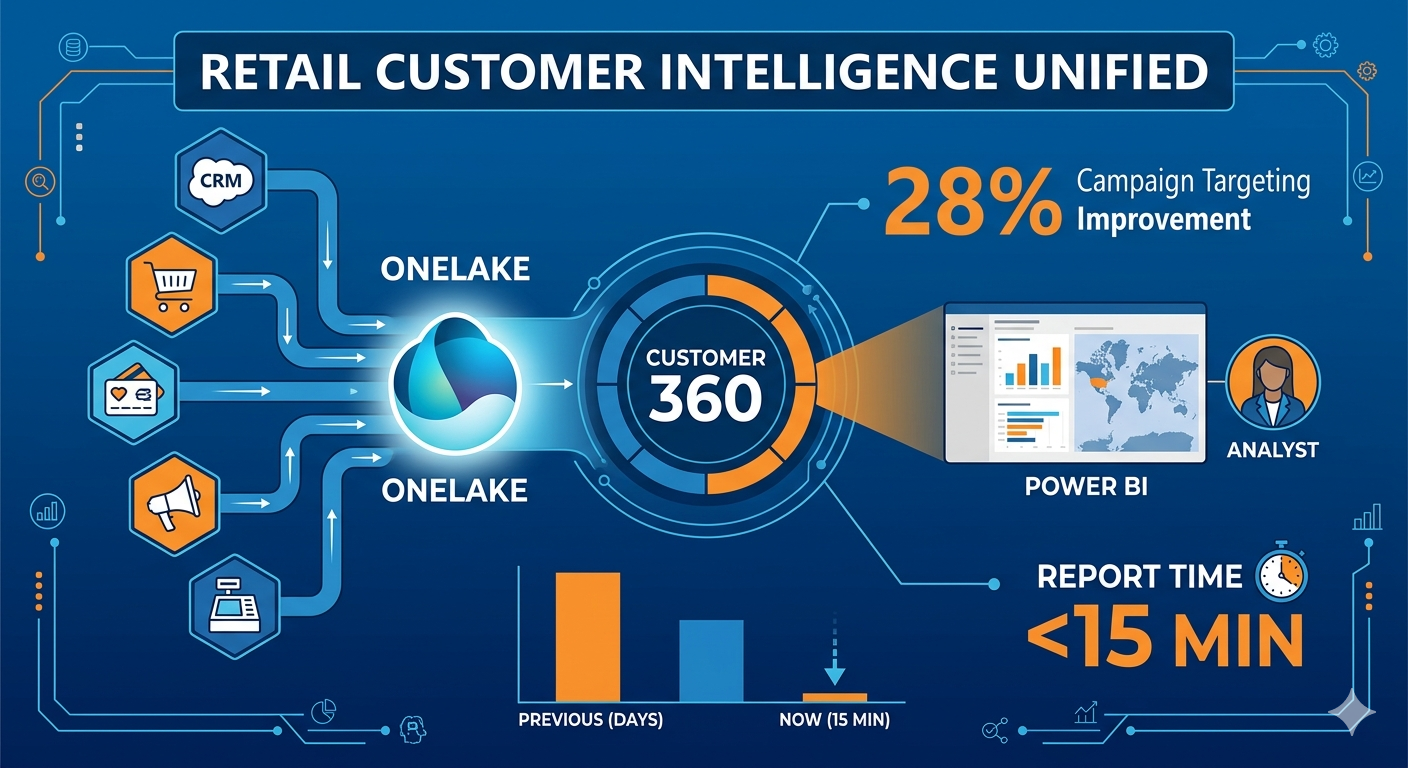
| Retail customer intelligence | OneLake + Customer 360 + Power BI | Faster segmentation and campaign insights |
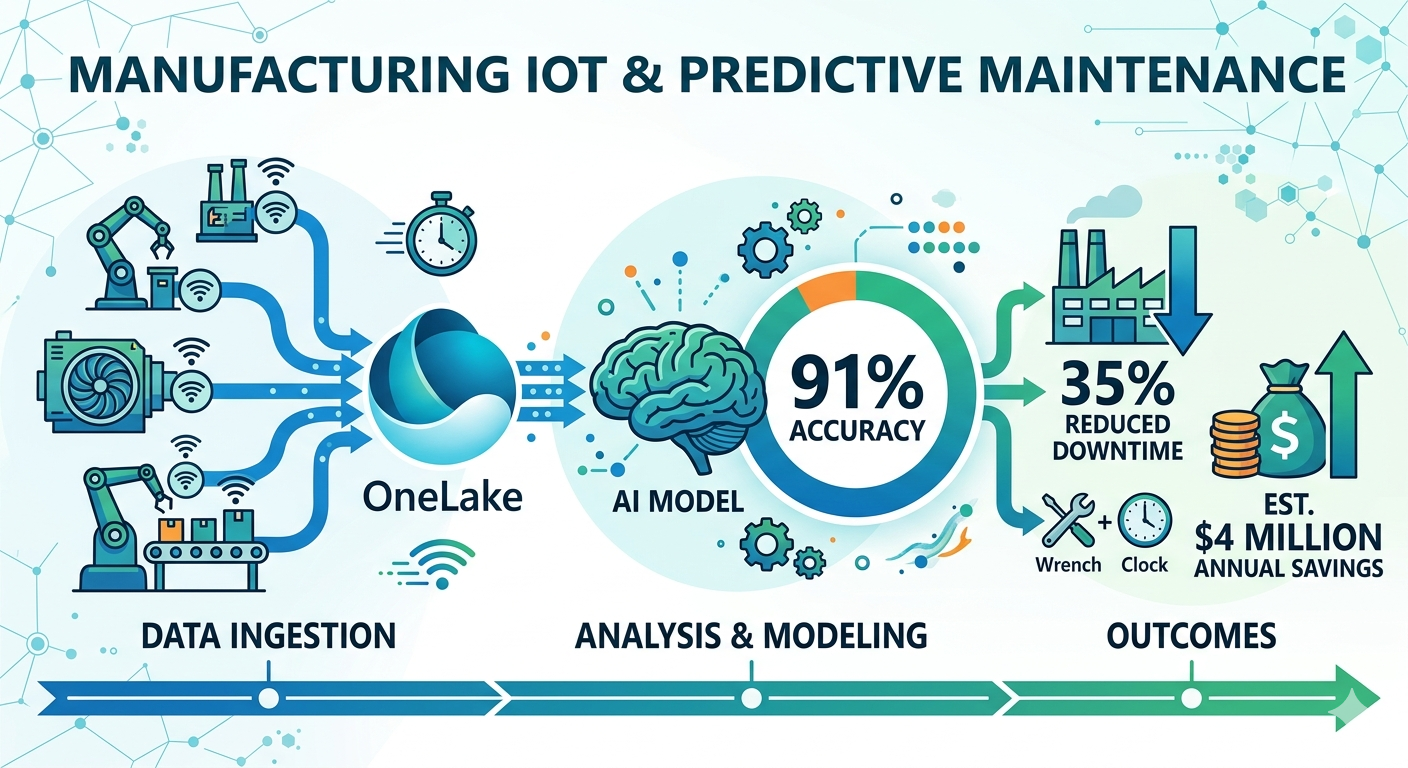
| Manufacturing IoT and predictive maintenance | Streaming + OneLake + AI modeling | Lower downtime and more reliable operations |
Financial Reporting
Fabric supports finance teams that need governed, low-latency reporting without stitching together separate reporting and warehouse tools. The source material positions Fabric as enabling materially faster report generation while reducing infrastructure overhead through consolidation.
Compliance and Governance Workloads
Fabric becomes especially valuable where lineage, sensitivity labels, and auditability matter. Purview integration helps organizations track movement from source to transformation to final report while applying consistent governance.
Customer Intelligence and AI-Driven Analytics
With OneLake at the center, teams can unify CRM, commerce, marketing, and transaction data for customer analytics and AI models without building a fresh set of integrations for each domain.
A Practical Move-to-Fabric Roadmap
Most teams should not migrate everything at once. A phased approach is faster, lower risk, and easier to govern.
| Phase | Focus | Outcome |
|---|---|---|
| Phase 1: Rationalize the current stack | Inventory tools, data flows, and duplication | Clear migration priorities |
| Phase 2: Establish the Fabric foundation | Configure capacity, workspaces, security, and OneLake patterns | Governed landing zone |
| Phase 3: Move high-value workloads first | Prioritize reporting, lakehouse, or BI use cases with measurable pain | Faster business value |
| Phase 4: Expand to AI and advanced analytics | Enable data science, real-time analytics, and Copilot-ready data | Strategic platform growth |
Phase 1: Rationalize the Current Stack
Identify overlapping ETL tools, warehouse layers, duplicated datasets, and governance gaps. This makes the business case clear and prevents a like-for-like migration of existing sprawl.
Phase 2: Establish the Fabric Foundation
Set up workspaces, capacity governance, naming standards, medallion or domain-based storage patterns, and Purview-aligned controls. Fabric succeeds when platform governance is defined early.
Phase 3: Move High-Value Workloads First
The best first migrations are workloads where latency, duplication, or operational cost is already a visible pain point. Executive reporting, finance analytics, governed lakehouse reporting, and customer 360 patterns are common early wins.
Phase 4: Expand to AI and Advanced Analytics
Once shared storage and governance are stable, teams can build machine learning, streaming, and Copilot-enabled analytics with much less friction than before.
Business Value for Decision Makers
- Lower platform complexity: Fewer overlapping tools, contracts, integrations, and security models.
- Better data engineering productivity: Engineers spend less time moving data between platforms and more time improving analytical value.
- Faster business insight delivery: Power BI, warehouse, and lakehouse experiences connect directly to the same data foundation.
- Stronger governance: OneLake plus Purview improves consistency around lineage, access, and sensitivity handling.
- More credible AI adoption: Fabric provides the governed data layer that enterprise AI programs depend on.
What to Watch Before You Move
- Fabric is not a license-only decision. It is an operating model change.
- Governance, workspace design, and capacity planning should be addressed before large-scale migration.
- Teams still need a clear domain model and ownership structure.
- Some workloads should be modernized, not simply rehosted.
Frequently Asked Questions
Why are data teams moving to Microsoft Fabric now instead of waiting?
Because many teams have already reached the limit of what fragmented analytics stacks can support. Fabric reduces duplication, shortens delivery cycles, and creates a more practical path to AI readiness by unifying ingestion, storage, analytics, and BI on one platform.
What is the biggest architectural difference between a legacy stack and Fabric?
The biggest shift is the move to OneLake and shared platform services. Instead of separate storage, separate governance, and separate tooling for each workload, Fabric allows multiple analytics experiences to run against a common data foundation with common administration and security.
Should every workload move to Fabric at the same time?
No. The best approach is phased. Start with high-friction or high-value workloads where Fabric can quickly reduce latency, duplication, or operating cost, then expand into broader platform modernization and AI scenarios.
How does Fabric help with AI readiness?
AI projects fail when enterprise data is scattered, duplicated, or poorly governed. Fabric improves AI readiness by centralizing governed data access, reducing copy-based analytics patterns, and making it easier to operationalize reporting, data science, and intelligent applications on one platform.
Conclusion
Microsoft Fabric gives data teams a credible way to replace fragmented analytics architecture with a unified platform built for governed reporting, engineering, and AI. The reason to move now is simple: the longer a team carries duplicated tools and disconnected storage patterns, the harder modernization becomes.
If your organization is evaluating analytics modernization, ARC can help you assess your current stack, design your target-state Fabric architecture, and execute a phased migration plan with governance built in from the start.
Frequently Asked Questions
What is Microsoft Fabric?
How is Fabric different from Azure Synapse?
What is OneLake in Microsoft Fabric?
How does Fabric pricing work?
Can I use Fabric with existing Power BI reports?

Al Rafay Consulting
ARC Team
AI-powered Microsoft Solutions Partner delivering enterprise solutions on Azure, SharePoint, and Microsoft 365.
LinkedIn Profile