Measure AI Chatbot ROI in Copilot Studio Before It Is Too Late
Measure AI Chatbot ROI in Copilot Studio Before It Is Too Late is a practical framework to measure Copilot Studio ROI using usage, quality, efficiency, and financial metrics that connect AI adoption to business outcomes.
A practical framework to measure Copilot Studio ROI using usage, quality, efficiency, and financial metrics that connect AI adoption to business outcomes.
ARC Team
· Updated April 14, 2026 · ARC Team

Organizations looking to strengthen this area can work with Copilot Studio consulting.
Many organizations deploy AI chatbots and celebrate launch metrics, but struggle to prove business value. Real ROI requires a measurement model that links chatbot performance to cost, productivity, and risk outcomes.
Copilot Studio gives teams enough telemetry to do this well, but only if the measurement framework is defined early. Many teams pair measurement design with copilot studio consulting so KPI definitions and rollout governance stay aligned.
Why ROI Measurement Matters
Without a clear ROI model, chatbot programs risk becoming visibility projects instead of business initiatives. Leaders need evidence that AI reduces workload, improves quality, and supports measurable financial outcomes.
The ROI Measurement Model
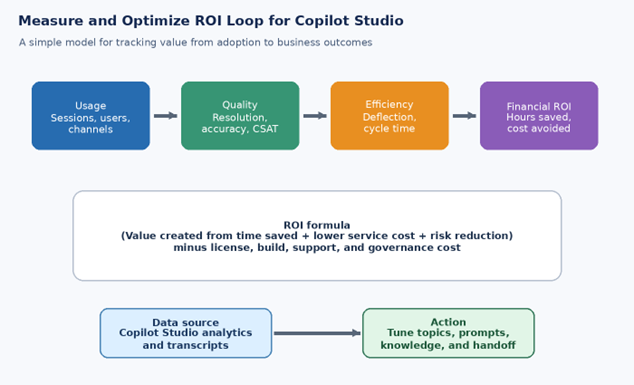
Usage Metrics
Track sessions, unique users, channel adoption, and repeat usage to understand demand and adoption momentum.
Quality Metrics
Track containment rate, resolution accuracy, user satisfaction, and escalation rate to evaluate service quality.
Efficiency Metrics
Track handling time reduction, ticket deflection, and cycle-time improvements to quantify operational leverage.
Financial Metrics
Estimate time saved, support cost reduction, rework reduction, and avoided risk cost where applicable.
Implementation Framework
| Phase | Focus | Outcome |
|---|---|---|
| Phase 1 | KPI design and baseline capture | Comparable before/after model |
| Phase 2 | Measurement instrumentation | Reliable reporting pipeline |
| Phase 3 | Optimization loop | Continuous ROI improvement |
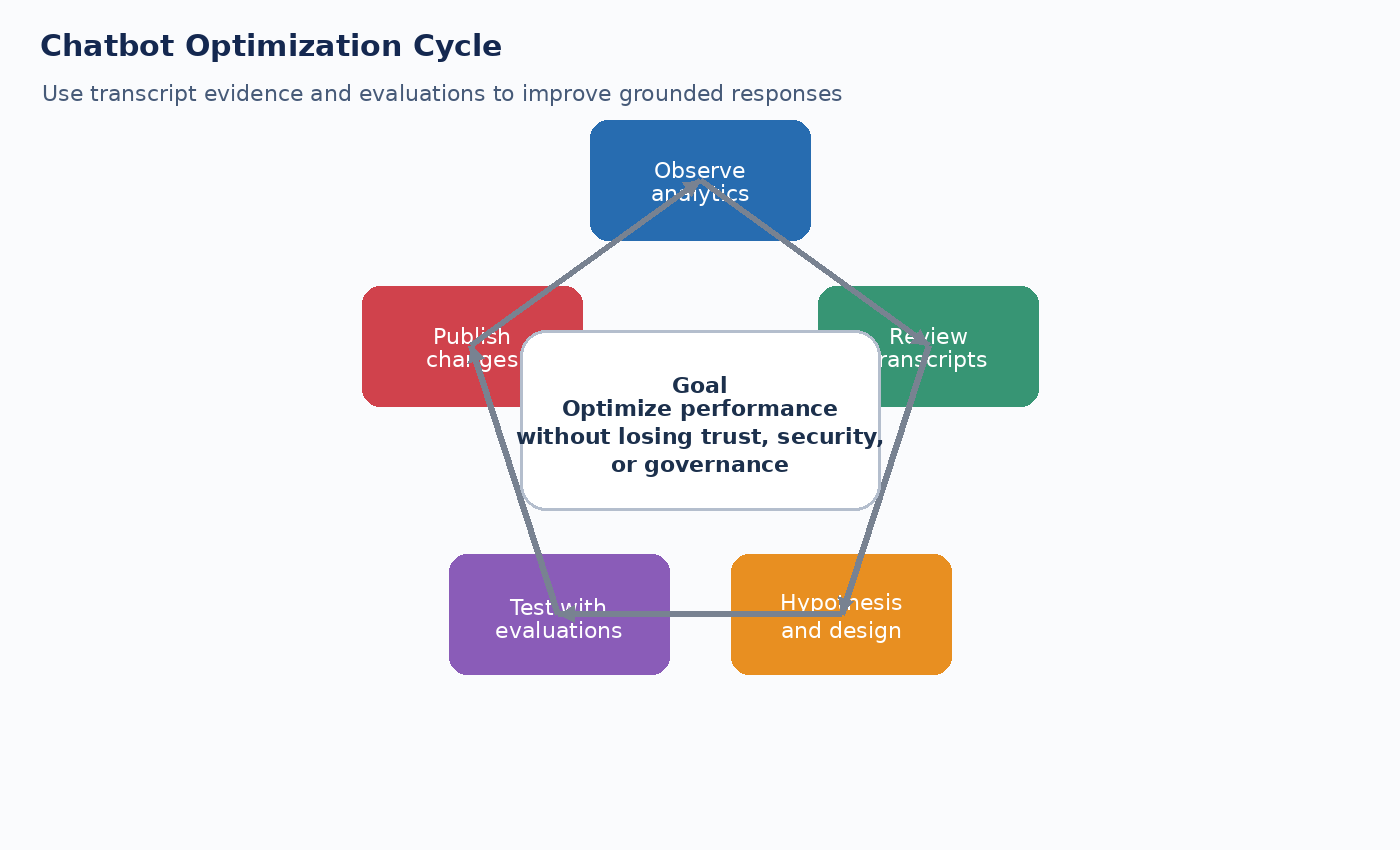
Phase 1: Define Baselines
Capture pre-deployment service metrics so improvement can be measured against real historical performance.
Phase 2: Instrument the Stack
Use Copilot Studio analytics and reporting workflows to collect usage, quality, and efficiency signals consistently.
Phase 3: Optimize and Iterate
Use transcript review and performance evidence to tune prompts, knowledge sources, and escalation logic.
Business Benefits of a Strong ROI Model
- Executive Confidence: Decisions are grounded in measurable value.
- Smarter Optimization: Teams improve what matters, not just what is easy to track.
- Sustainable Funding: Strong evidence supports scale investment.
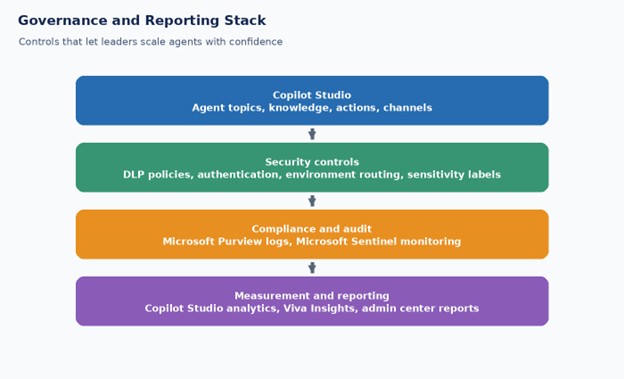
- Better Governance Alignment: Quality and risk are measured alongside speed.
Common ROI Mistakes
- Measuring only chatbot usage, not business outcomes
- Ignoring baseline data before launch
- Reporting vanity metrics without financial linkage
- Treating optimization as a one-time activity
Frequently Asked Questions
What is the best first ROI metric?
Start with resolved interactions and time saved, then connect these metrics to cost reduction and quality outcomes.
How often should ROI be reviewed?
Monthly reviews are common in early rollout, then quarterly once the operating model is stable.
Can ROI include risk and compliance value?
Yes. Reduced policy violations, better auditability, and fewer escalation failures can be part of enterprise ROI.
Do we need BI tooling for ROI reporting?
Basic reporting can start within existing analytics, but enterprise programs benefit from dashboarding and trend analysis workflows.
Conclusion
Copilot Studio ROI is measurable when teams track the right signals and run a disciplined optimization loop. The goal is not simply chatbot activity, but improved business performance with governed AI operations.
If your organization is building a Copilot Studio program, ARC can help with KPI strategy, implementation, and optimization.
Frequently Asked Questions
What is the best first ROI metric?
Start with resolved interactions and time saved, then connect these metrics to cost reduction and quality outcomes.
How often should ROI be reviewed?
Monthly reviews are common in early rollout, then quarterly once the operating model is stable.
Can ROI include risk and compliance value?
Yes. Reduced policy violations, better auditability, and fewer escalation failures can be part of enterprise ROI.
Do we need BI tooling for ROI reporting?
Basic reporting can start within existing analytics, but enterprise programs benefit from dashboarding and trend analysis workflows.

ARC Team
ARC Team
AI-powered Microsoft Solutions Partner delivering enterprise solutions on Azure, SharePoint, and Microsoft 365.
LinkedIn Profile