What Is Microsoft AI Foundry? Why Companies Want It Fast
Microsoft AI Foundry is an enterprise AI platform that unifies model access, agent orchestration, development tools, monitoring, and governance controls in one managed environment for building and deploying AI solutions at scale.
Understand what Microsoft AI Foundry is, why enterprises are adopting it quickly, and how to implement it with governance, scalability, and measurable outcomes.
ARC Team
· Updated April 8, 2026 · ARC Team

Enterprises are moving beyond AI pilots, but many still struggle to scale because their architecture is fragmented across disconnected tools, teams, and governance models. That fragmentation increases operational risk, slows delivery, and makes cost control difficult.
Microsoft AI Foundry is gaining momentum because it addresses these gaps with a unified platform model. This article explains what Foundry is, why companies want it fast, and how to adopt it with speed, control, and measurable business value.
What Is Microsoft AI Foundry?
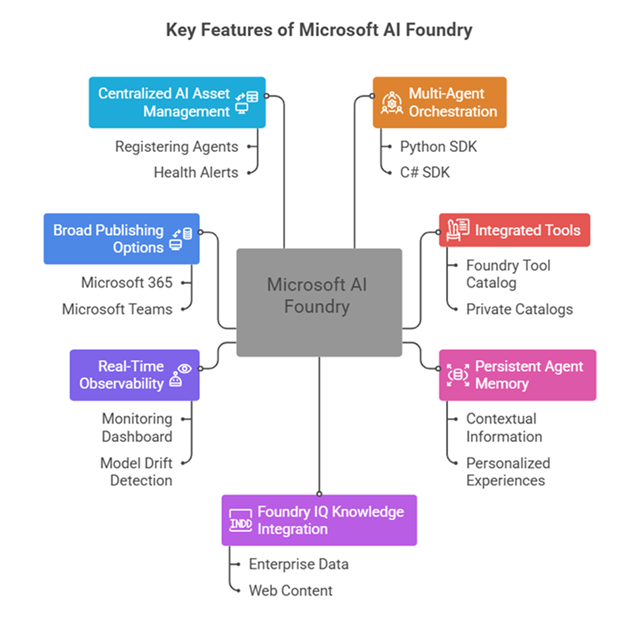
Microsoft AI Foundry is an enterprise AI platform for building, orchestrating, deploying, and governing AI systems at scale. Instead of treating model access as the end goal, Foundry supports the full lifecycle from experimentation to production operations.
It brings model services, orchestration patterns, publishing options, observability, and policy controls together in one environment so organizations can innovate without sacrificing governance.
Why Companies Want Microsoft AI Foundry Fast
Organizations are under pressure to deliver AI outcomes quickly while maintaining compliance, security, and reliability. Foundry helps reduce time-to-value by replacing point-solution sprawl with a platform approach that IT and business teams can scale together.
This is especially valuable in regulated environments where leadership needs clear accountability, auditability, and centralized control over AI workloads.
From Fragmented Tools to Business Outcomes
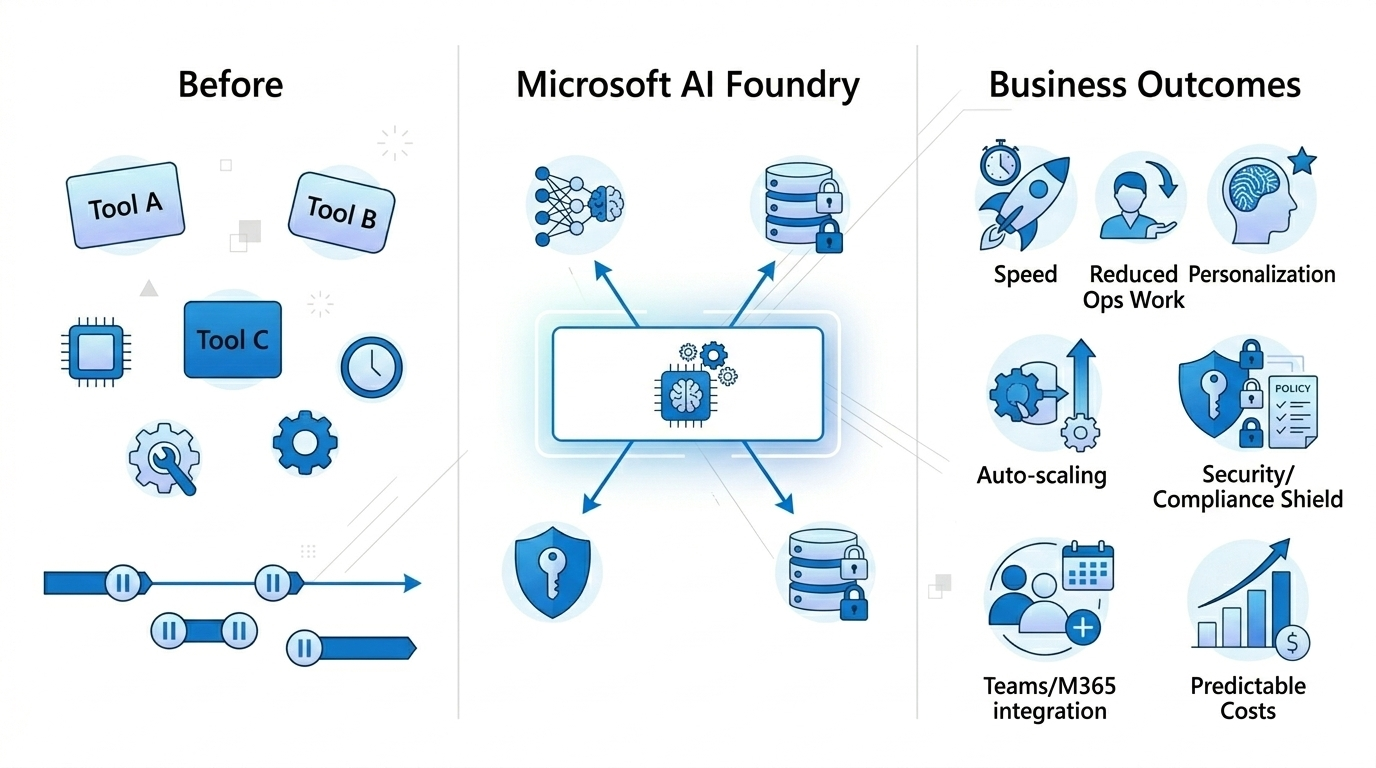
Before Foundry, teams often rely on separate tools, disconnected workflows, and manual handoffs. With Foundry, companies move to a centralized model that enables faster delivery, lower operational drag, and stronger governance.
Step-by-Step Framework for Microsoft AI Foundry Adoption
| Phase / Step | Focus | Outcome |
|---|---|---|
| Step 1: Explore and Prioritize | Select high-impact use cases and define success metrics | Clear ROI targets and aligned stakeholders |
| Step 2: Deploy Core Resources | Stand up model, compute, and storage with policy guardrails | Production-ready foundation with governance |
| Step 3: Scale with Operations | Expand usage with observability, cost tracking, and standards | Predictable outcomes at enterprise scale |
Step 1: Explore and Prioritize
Start with a focused set of use cases where AI can reduce turnaround time or improve service quality. Define business KPIs early, such as cycle-time reduction, quality improvements, and cost-to-serve impact.
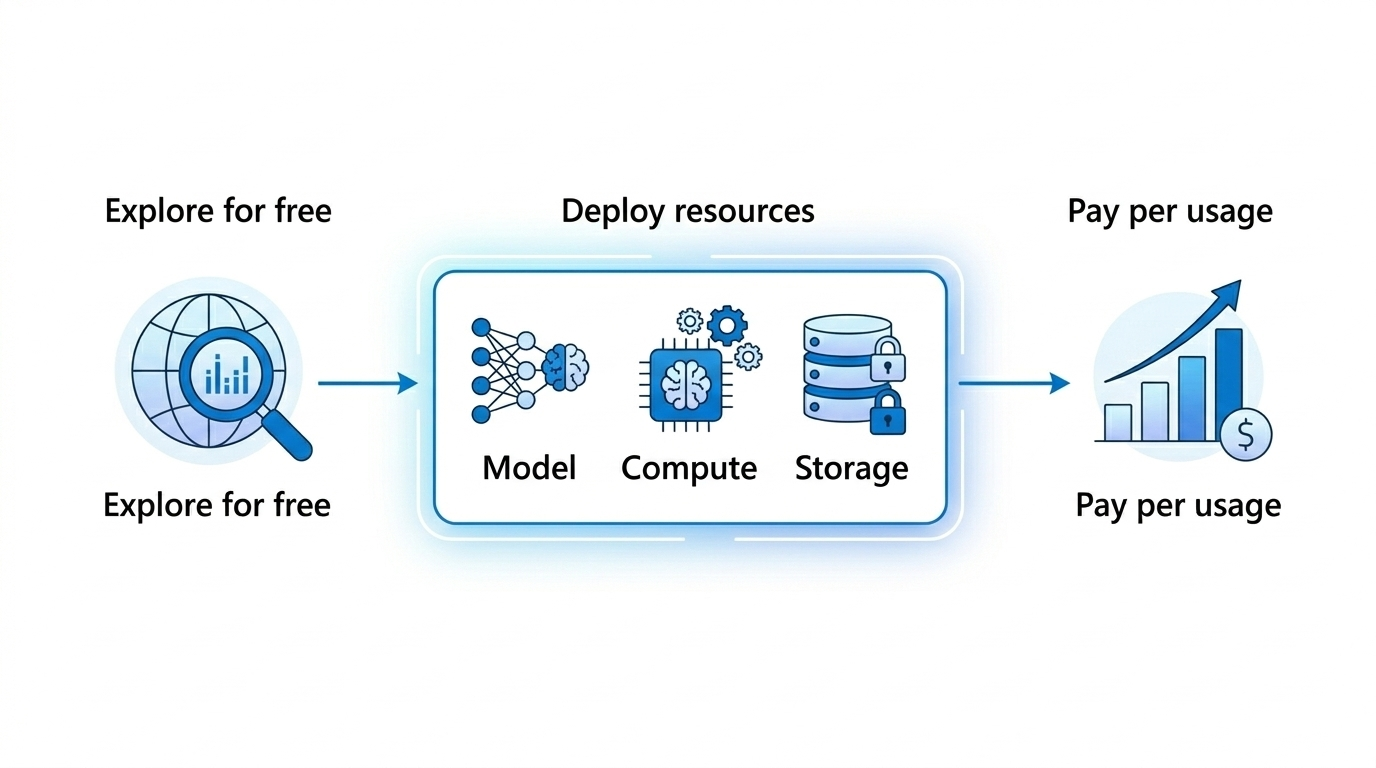
Step 2: Deploy Core Resources
Deploy the required model, compute, and storage layers in a controlled Azure environment. Build security, identity boundaries, and monitoring baselines into the architecture before broader rollout.
Step 3: Scale with Operations
After validating pilot quality and controls, scale through reusable patterns, prompt libraries, and centralized observability. This lowers operational overhead while improving consistency across departments.
Key Benefits of Microsoft AI Foundry
- Faster time-to-value: Teams deliver production AI use cases faster with less integration overhead.
- Lower operational complexity: Centralized governance and observability reduce manual coordination.
- Stronger security posture: Policy controls and enterprise access models support compliance-sensitive workloads.
- Predictable scaling: Structured platform operations improve budget planning and workload reliability.
Core Features and Strategic Considerations
- Centralized AI asset management for model and agent lifecycle control.
- Multi-agent orchestration support for complex workflow automation.
- Integrated tools and catalog capabilities to standardize build patterns.
- Real-time monitoring for performance, drift, and policy alignment.
- Broad publishing pathways across enterprise channels, including Microsoft 365 and Teams.
Organizations combining these capabilities with azure ai foundry consulting can streamline delivery, improve cross-system handoffs, and accelerate enterprise AI outcomes.
Frequently Asked Questions
What is Microsoft AI Foundry in simple terms?
Microsoft AI Foundry is an enterprise platform for building and operating AI systems with centralized controls for deployment, orchestration, monitoring, and governance.
Why are companies adopting Microsoft AI Foundry quickly?
Because it helps organizations move from fragmented pilots to scalable production systems with better security, compliance, and cost management.
Is Microsoft AI Foundry only for large enterprises?
No. Mid-sized companies also benefit when they need to scale AI responsibly and avoid disconnected tooling decisions.
How long does initial setup usually take?
A focused pilot can start quickly, while full enterprise rollout usually follows a phased implementation based on governance and change management readiness.
Conclusion
Microsoft AI Foundry gives organizations a practical path to turn AI experimentation into enterprise execution. Its value comes from combining platform speed with governance discipline, so teams can scale confidently.
If your organization is exploring Microsoft AI Foundry, ARC can help with strategy, implementation, governance, and optimization.
Frequently Asked Questions
What is Microsoft AI Foundry?
Microsoft AI Foundry is an enterprise AI platform that unifies model access, agent orchestration, development tools, monitoring, and governance controls in one managed environment for building and deploying AI solutions at scale.
Who should use Microsoft AI Foundry?
Enterprise organizations looking to move beyond AI pilots into production-scale AI systems. It is ideal for teams needing centralized governance, multi-model access, and integrated observability.
How does AI Foundry differ from Azure OpenAI Service?
Azure OpenAI provides model API access, while AI Foundry is the full platform layer that includes orchestration, agent frameworks, evaluation tools, deployment options, and governance — with Azure OpenAI as one of its model providers.
What models are available in AI Foundry?
AI Foundry offers GPT-4o, GPT-4, GPT-3.5 Turbo, open-source models like Llama and Mistral, plus specialized models for embeddings, vision, and speech processing.
Is AI Foundry suitable for regulated industries?
Yes. AI Foundry includes enterprise-grade security, RBAC, audit logging, content filtering, and compliance certifications making it suitable for healthcare, financial services, and government use cases.

ARC Team
ARC Team
AI-powered Microsoft Solutions Partner delivering enterprise solutions on Azure, SharePoint, and Microsoft 365.
LinkedIn Profile