M365 GDPR Compliance: What You Must Do Right Now
M365 GDPR Compliance is strengthen Microsoft 365 GDPR compliance with a practical checklist, governance framework, and collaboration controls you can apply immediately.
Strengthen Microsoft 365 GDPR compliance with a practical checklist, governance framework, and collaboration controls you can apply immediately.
ARC Team
· Updated April 20, 2026 · ARC Team

Microsoft 365 enables faster collaboration, but personal data also moves faster across mailboxes, chats, files, and shared workspaces. Without practical controls, that speed creates privacy and compliance risk.
Organizations looking to strengthen this area can work with data security & governance.
This guide explains what GDPR means in a Microsoft 365 environment, what to do now, and how to build a practical operating model for data governance, security, and defensible compliance.
What GDPR Means for Microsoft 365 Teams
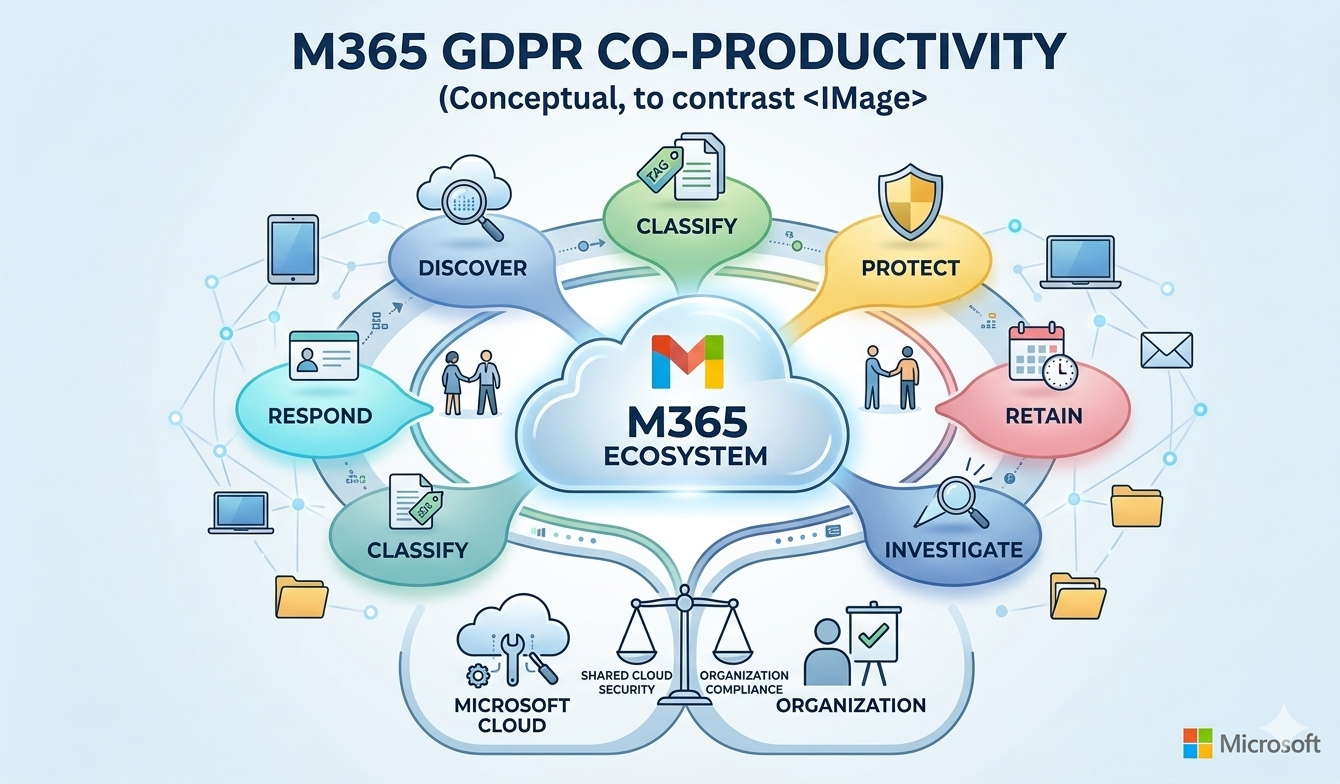
GDPR requires organizations to process personal data lawfully, transparently, and securely, while honoring rights such as access, correction, and erasure. In Microsoft 365, personal data can be distributed across Exchange, Teams, SharePoint, OneDrive, and connected apps.
That means compliance is not a single setting. It is a cross-platform governance model covering identity, classification, sharing, retention, investigations, and response.
Build a Practical GDPR Compliance Framework
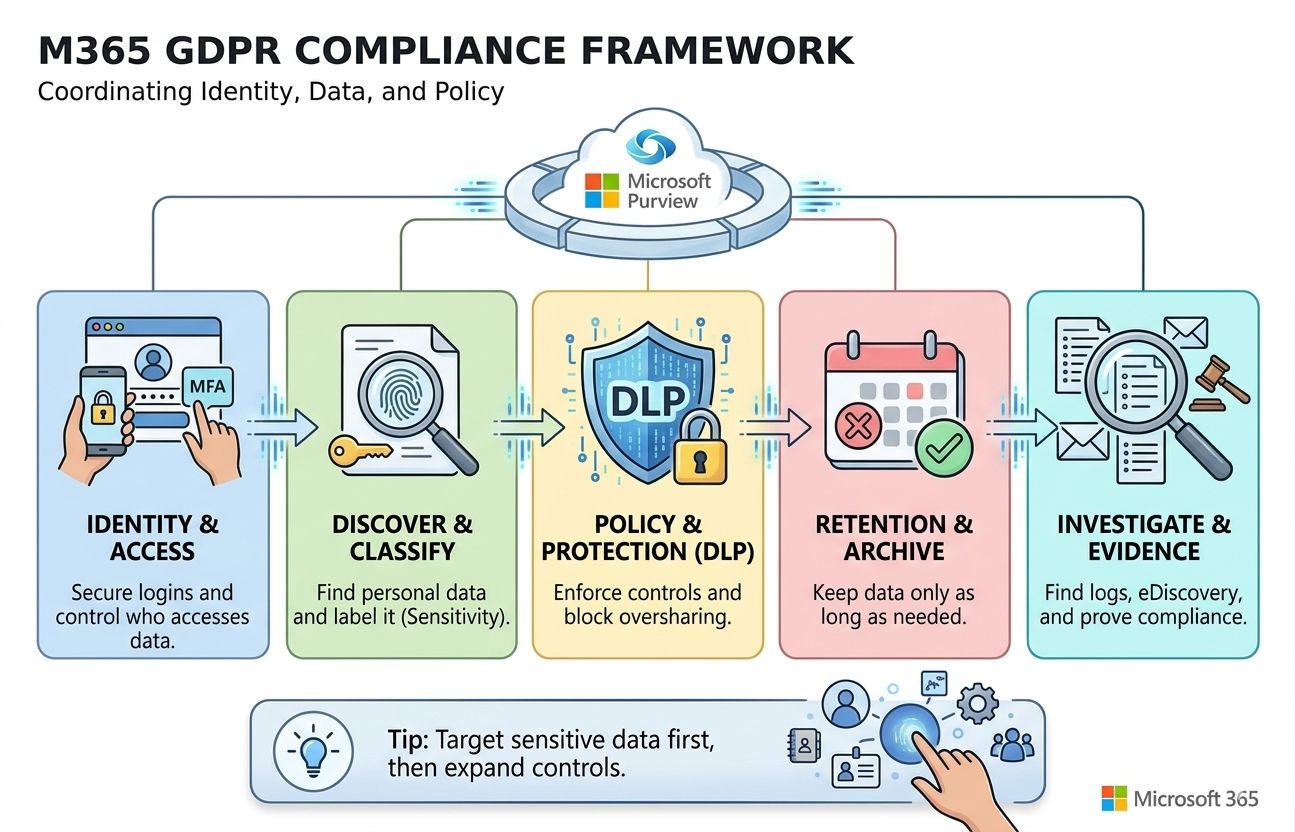
Start with identity and access. Multifactor authentication, role governance, conditional access, and guest access control form the foundation of every data protection control.
Next, focus on visibility and enforcement. Microsoft Purview capabilities for classification, sensitivity labels, DLP, retention, audit, and eDiscovery should be aligned under one governance model with clear ownership.
Step-by-Step GDPR Compliance Roadmap
| Phase / Step | Focus | Outcome |
|---|---|---|
| Step 1: Assess Data and Access Risk | Map personal data locations and privileged access paths | Clear baseline and risk visibility |
| Step 2: Deploy Core Purview Controls | Classification, DLP, retention, and investigation workflows | Reduced leakage risk and stronger auditability |
| Step 3: Operationalize Ownership and Reviews | Subject rights processes, control owners, and review cadence | Sustainable compliance model |
Phase 1: Map and Prioritize
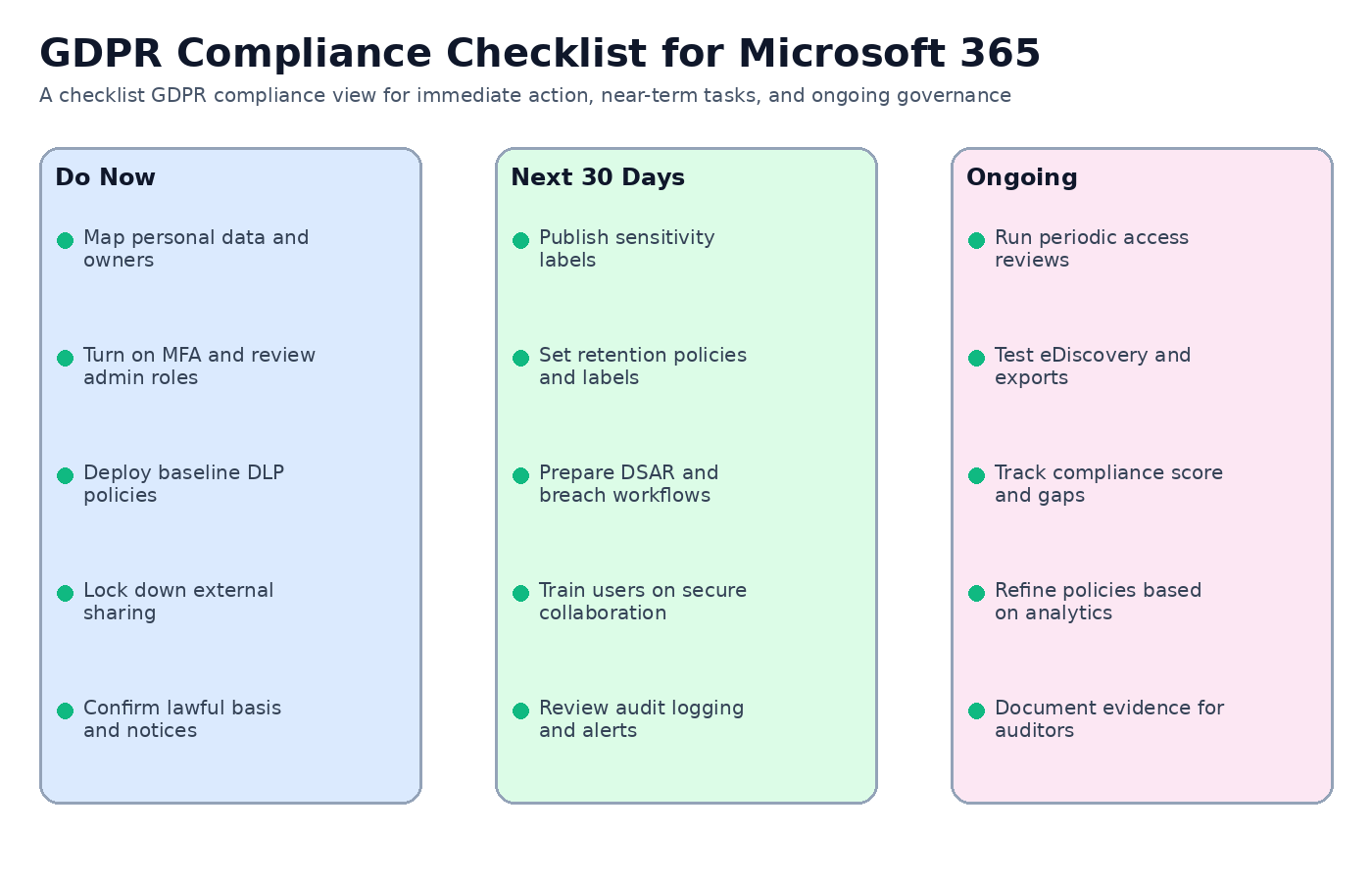
Document where personal data lives, who can access it, and which sharing paths create the highest exposure. Prioritize high-volume and high-risk collaboration locations first.
Phase 2: Enforce Baseline Controls
Launch core sensitivity labels, test DLP in simulation mode, implement retention policies, and validate investigation workflows for legal, HR, and security scenarios.
Phase 3: Scale Governance Rhythm
Assign accountable owners to each major control, document exceptions, and run recurring governance reviews. Compliance succeeds when controls are operational, not only documented.
Key Benefits of a Governed M365 Compliance Model
- Lower regulatory exposure: Better control over sensitive data handling and sharing.
- Faster incident response: Clear audit and investigation workflows reduce delay.
- Improved audit readiness: Policy evidence and ownership become easier to demonstrate.
- Higher trust in collaboration: Teams work faster with guardrails instead of uncertainty.
Core Compliance Capabilities to Prioritize
- Sensitive data discovery and classification
- Sensitivity labels and DLP enforcement
- Retention and deletion lifecycle control
- Audit and eDiscovery response readiness
Frequently Asked Questions
Is Microsoft 365 automatically GDPR compliant?
What should a GDPR checklist include?
How fast can we improve baseline compliance?
Why combine governance and collaboration decisions?
Conclusion
Microsoft 365 can support strong GDPR outcomes when compliance and collaboration are designed together. Start with data visibility, enforce practical guardrails, and operationalize ownership so controls remain effective as the business evolves.
If your organization is exploring M365 compliance, ARC can help with strategy, implementation, governance, and optimization.
Frequently Asked Questions
What is Zero Trust security?
Zero Trust is a security framework that assumes no user or device should be trusted by default — requiring continuous verification of identity, device health, and access permissions for every request.
How does Microsoft implement Zero Trust?
Microsoft Zero Trust uses Entra ID for identity, Intune for device compliance, Defender for threat protection, Purview for data protection, and Conditional Access for policy enforcement.
What compliance certifications does Microsoft support?
Microsoft cloud services hold SOC 1/2/3, ISO 27001/27018, HIPAA, FedRAMP, GDPR, PCI DSS, and 90+ other compliance certifications across industries and regions.
How do you assess security posture?
We evaluate Microsoft Secure Score, conduct gap analyses against frameworks like NIST and CIS, review configurations, test access controls, and provide prioritized remediation recommendations.
Can you help with regulatory compliance?
Yes. We implement Microsoft Purview compliance solutions including data classification, retention policies, eDiscovery, audit logging, and information barriers for regulated industries.

ARC Team
ARC Team
AI-powered Microsoft Solutions Partner delivering enterprise solutions on Azure, SharePoint, and Microsoft 365.
LinkedIn Profile