Build vs Buy Embedded BI: A Decision Framework for Product Teams
Build vs buy embedded BI is a product strategy decision balancing engineering effort, governance requirements, multi-tenant security, and time-to-market.
Embedded BI build vs buy explained: architecture, security, Power BI Embedded, Microsoft Fabric, and a 10-question framework to decide.
Al Rafay Consulting
· Updated July 16, 2026 · ARC Team
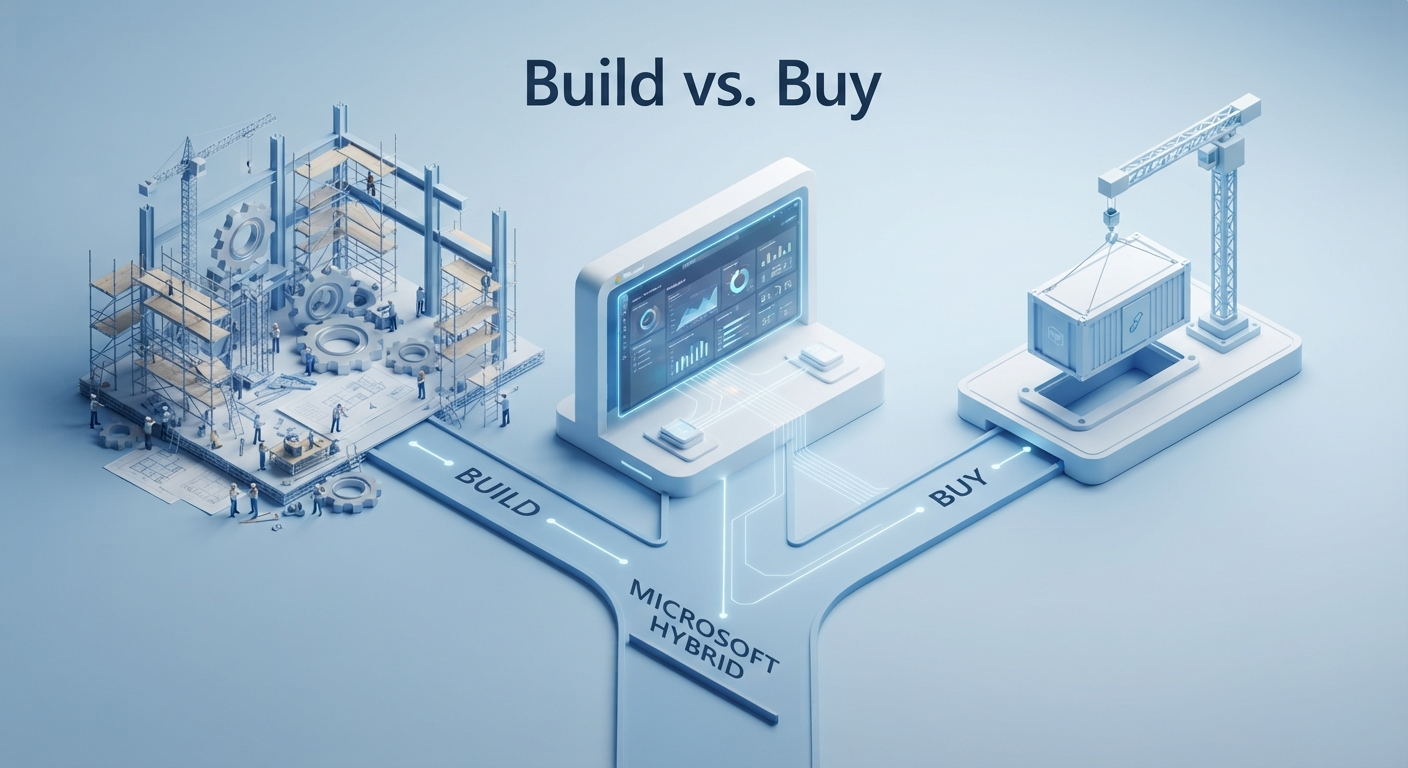
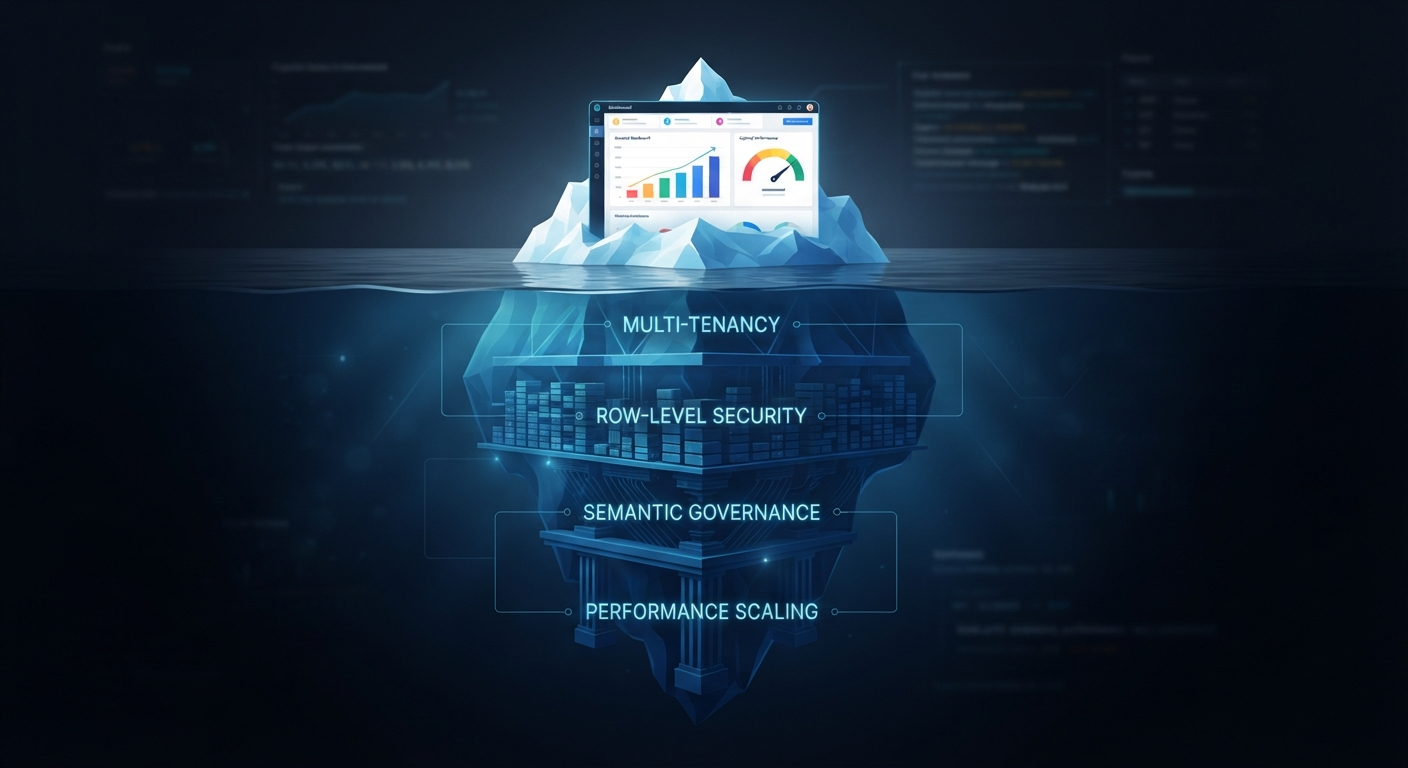
Product teams usually underestimate embedded BI by focusing on charts, not the architecture beneath them. The first dashboard ships quickly, but tenant isolation, security controls, semantic consistency, and scale management become the real project.
This guide helps you choose between building embedded BI in-house, buying a platform, or using a Microsoft-first hybrid with Power BI Embedded and Fabric.
Quick Decision
- Build when analytics is your core product differentiator and you can fund long-term engineering ownership.
- Buy when analytics supports the product but speed and lower implementation risk matter more.
- Use a Microsoft-first hybrid when you need product-speed delivery plus enterprise governance.
What Makes Embedded BI Hard
The hard work is rarely visual design. It is security and operations:
- multi-tenant data isolation
- RLS and OLS enforcement
- semantic model governance
- performance and capacity planning
- white-labeled user experience consistency
Build vs Buy vs Microsoft-First Hybrid
| Approach | Best fit | Main tradeoff |
|---|---|---|
| Build | Analytics is core IP | Highest engineering and maintenance burden |
| Buy | Fast delivery with less engineering overhead | Recurring licensing and vendor lock-in risk |
| Microsoft-first hybrid | Governance + product speed | Requires architecture discipline and capacity planning |
For teams already in Microsoft, combine Power BI consulting with Microsoft Fabric consulting and Business intelligence services for faster execution.
Financial Analytics Use Case
In finance-heavy products, trust and control are non-negotiable. A governed semantic model plus role-based access is often the difference between adoption and abandonment.
ARC’s embedded analytics approach is designed for these scenarios, where users need secure, in-product insights without exporting data into side tools.
For proof patterns, review the Centralized business intelligence case study.
Security and Governance Baseline
A production-ready architecture should include:
- RLS and OLS policy design
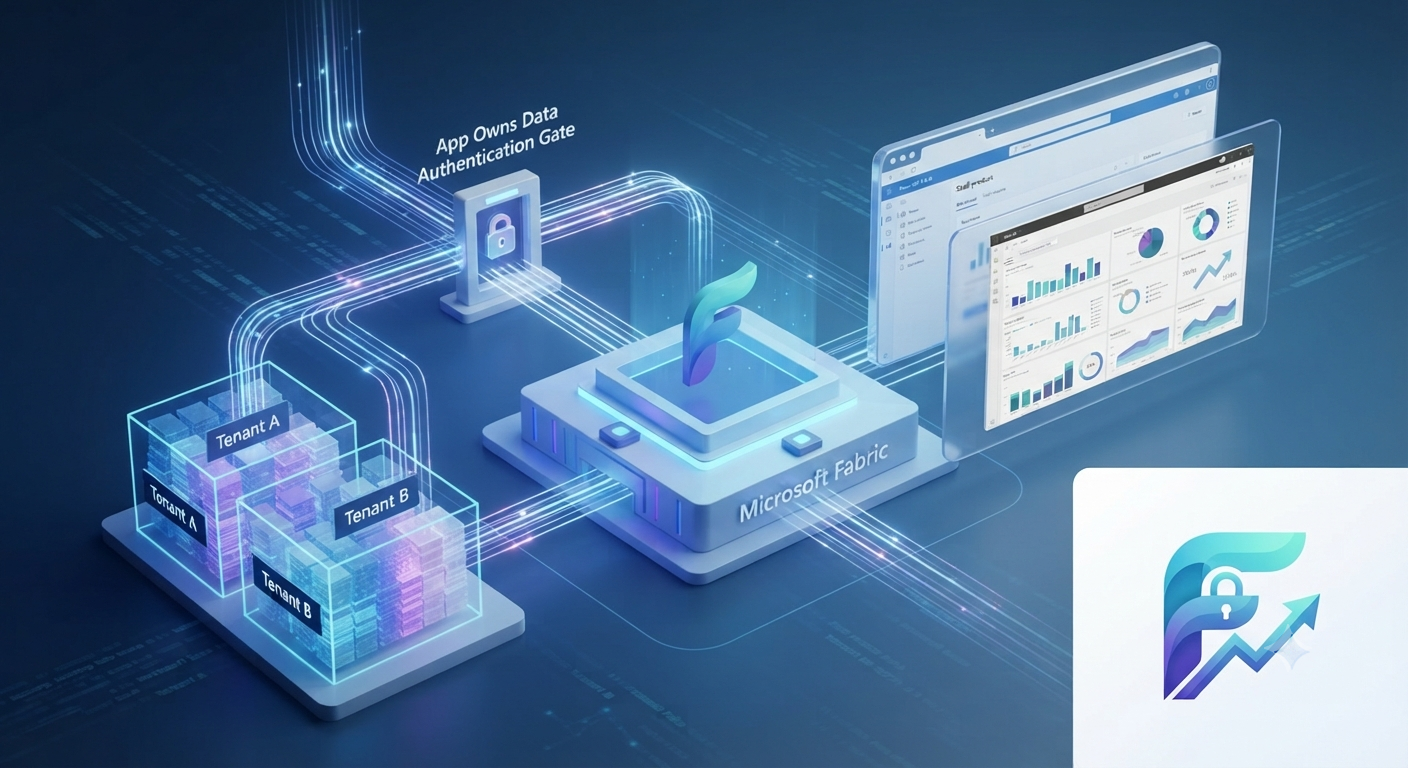
- service principal authentication model
- workspace isolation strategy
- governance alignment with Data security and governance
For financial KPI strategy and model design, use the existing financial data analytics article as supporting guidance.
10-Question Decision Framework
- Is analytics core to product differentiation?
- Can your team sustain long-term analytics infrastructure ownership?
- How many tenants must be isolated today and at scale?
- What compliance obligations apply?
- How quickly must this ship?
- How much white-label control is required?
- Is AI-assisted analytics part of the roadmap?
- What is acceptable vendor dependency risk?
- Can you operate governance and security at scale?
- Which option yields best 3-year total cost of ownership?
Ready to Decide Build vs Buy?
Use a structured assessment to align architecture, security, and cost before committing roadmap and engineering capacity.
Request an InsightArc DemoFrequently Asked Questions
What is embedded BI?
Embedded BI is the integration of dashboards, reports, and analytics directly inside a product, portal, or application, so users can explore data without switching to a separate BI tool.
Should we build or buy embedded BI?
Build if analytics is core to your product's differentiation and you can commit sustained engineering investment. Buy if analytics supports your product but isn't the primary reason customers choose you. Consider a Microsoft-first hybrid if you need enterprise governance alongside product-speed delivery.
How much does embedded BI cost?
Cost varies by approach: building in-house involves high upfront engineering investment plus ongoing maintenance; buying a platform involves recurring licensing tied to usage or customer count; a Microsoft-first hybrid involves Fabric capacity costs plus implementation, without per-external-user licensing under the App Owns Data model.
Can Power BI be embedded into a SaaS product?
Yes. Power BI Embedded is designed for this, using the App Owns Data model to deliver customer-facing analytics without requiring external users to hold individual Power BI licenses.
What is App Owns Data in Power BI Embedded?
App Owns Data is the 'embed for your customers' model, where your application handles authentication independently and external users don't need their own Power BI credentials or license to view embedded reports.
Do external users need Power BI licenses?
Under the App Owns Data model, no. External app users don't require individual Power BI licenses. The User Owns Data model typically does require users to sign in with their own Power BI credentials and license.
How do RLS and OLS protect tenant data?
Row-Level Security restricts which data rows a user or tenant can see, while Object-Level Security restricts access to specific tables or fields, together forming the core mechanism for enforcing tenant data isolation.
What is the best architecture for multi-tenant embedded BI?
Most customer-facing multi-tenant products use App Owns Data with service principal authentication, RLS/OLS for data isolation, and deliberate workspace isolation strategy to balance security with manageability as the tenant base grows.

Al Rafay Consulting
ARC Team
AI-powered Microsoft Solutions Partner delivering enterprise solutions on Azure, SharePoint, and Microsoft 365.
LinkedIn Profile