CRE Asset Management Software Explained: Features, Benefits, and Use Cases
CRE asset management software helps commercial real estate firms manage portfolio-level financial performance, strategic oversight, and investor reporting across multiple assets from one unified data foundation.
Learn what CRE asset management software does, how it differs from property management software, and where AI and Microsoft tech fit in.
Al Rafay Consulting
· Updated July 14, 2026 · ARC Team
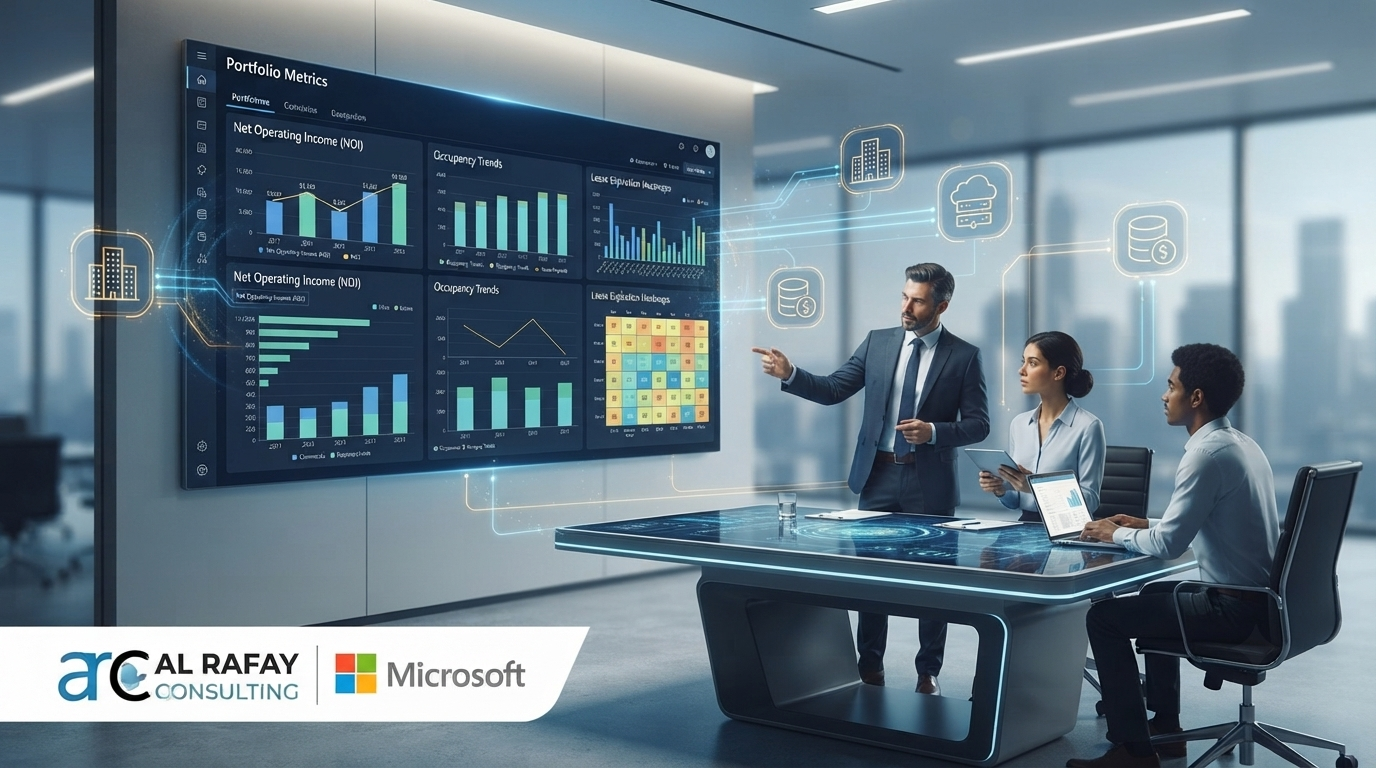
Ask five people at a commercial real estate firm where the true occupancy number lives, and you will probably get five different answers: a spreadsheet here, a property system there, and an email thread nobody can find. That fragmentation is not a minor annoyance. It is why portfolio reporting takes days instead of minutes, and why renewal, CapEx, and acquisition decisions are made on stale data.
CRE asset management software exists to solve that exact problem, but it is often confused with property management software. Knowing the difference before evaluation matters.
For deeper context on operational workflows, see the Property Management Software Buyer’s Guide.
What Is CRE Asset Management Software?
CRE asset management software helps commercial real estate organizations manage portfolio-level performance, strategic decisions, and investor reporting across assets. It tracks metrics like NOI, valuation movement, lease risk exposure, and portfolio returns.
Where property software focuses on running one building, CRE asset management software focuses on managing the investment outcome of many buildings.
Why Commercial Real Estate Firms Need Specialized Software
Generic spreadsheets and disconnected business tools are not built for NNN complexity, CAM reconciliation, CPI escalations, and investor-grade reporting speed.
- Data silos create conflicting portfolio numbers
- Reporting cycles stay manual and slow
- Portfolio risk is hard to detect early
- Teams spend time consolidating instead of deciding
CRE Asset Management vs. Property Management Software
This distinction drives better buying decisions.
| Category | Primary Focus | Typical User | Key Metrics |
|---|---|---|---|
| CRE Asset Management Software | Portfolio financial performance and strategy | Asset managers, investors, portfolio leaders | NOI, IRR, valuation, portfolio returns |
| Property Management Software | Daily building operations | Property managers, leasing teams, maintenance teams | Occupancy, work orders, rent collection, lease administration |
In practice, high-performing organizations want both views connected. That is why modern stacks increasingly bridge portfolio intelligence and property management software operations on one data foundation.

Core Features of CRE Asset Management Software
Lease Management
Centralized tracking for terms, critical dates, escalation clauses, and renewal windows.
Financial Reporting
Property and portfolio P&L, NOI, CAM reconciliation, and variance views.
Portfolio Analytics
Dashboards for occupancy trend, rollover risk, and cross-asset benchmarking.
Investor Reporting
Automated reporting packages that replace manual quarterly compilation.
Maintenance Management
Work order and vendor workflows with predictive maintenance capability.
Tenant Experience
Tenant self-service and communication workflows that improve retention.
Benefits of CRE Asset Management Software
- Better portfolio visibility from one trusted source
- Faster and higher-confidence decisions
- Improved NOI control through earlier issue detection
- Automated reporting and workflow execution
- Lower risk from missed dates and fragmented records
Real-World Use Cases
- Portfolio managers identify underperforming assets earlier through trend dashboards
- Asset teams compress investor reporting cycles from days to same-day exports
- Operations teams reduce emergency repair cost with predictive maintenance cues
- CFO teams benchmark acquisition targets against existing portfolio performance
Common Challenges and How to Avoid Them
| Challenge | Why It Happens | How To Avoid It |
|---|---|---|
| Fragmented data | Lease, financial, and tenant records live in separate tools | Prioritize a unified data model before feature shopping |
| Manual reporting | Consolidation depends on spreadsheets | Select software with standardized automated reporting |
| Low adoption | Teams are excluded from evaluation and rollout | Involve asset and operations stakeholders from day one |
| AI underperformance | AI is added on top of poor data quality | Clean and govern data before scaling AI use cases |
Best Practices for Implementation
- Start with a unified data strategy
- Prioritize reporting automation in phase one
- Pilot on one segment before broad rollout
- Plan explicit migration and metadata cleanup
- Treat governance as core architecture, not post-launch cleanup
Future Trends in CRE Technology
- AI moves from pilots into embedded portfolio operations
- Copilot-style reporting enables conversational analytics
- Investor expectations shift to near-real-time visibility
- Unified data architecture becomes a competitive edge
- PropTech spend keeps rising with digital CRE maturity
How Microsoft-Powered Platforms Are Changing CRE Operations
Most guides skip a major option: building or extending CRE capability on Microsoft rather than forcing another silo.
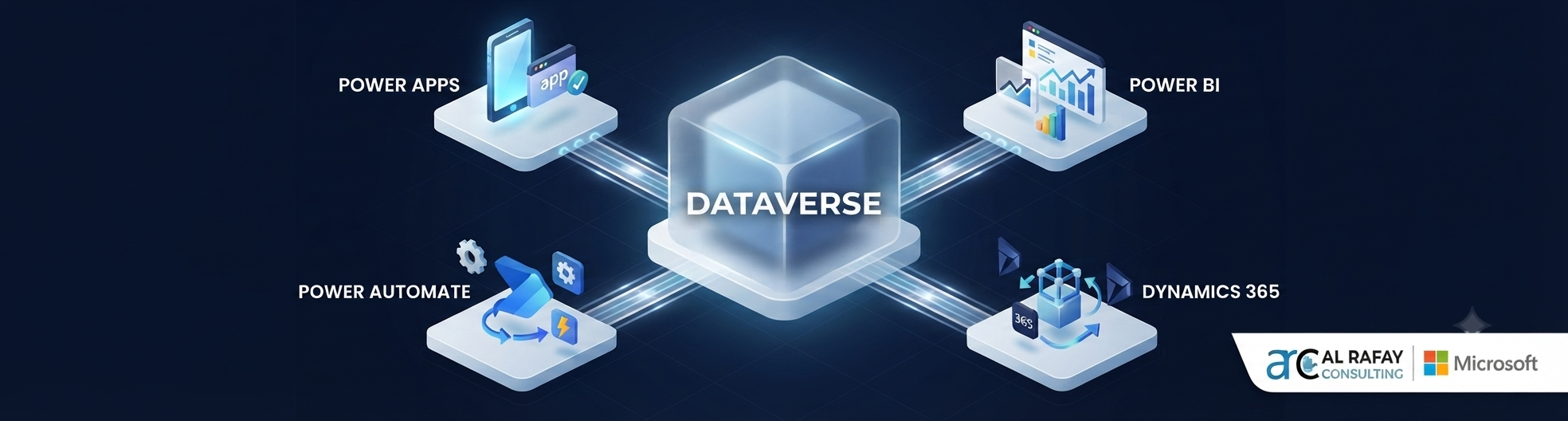
- Power Platform supports custom leasing, approvals, and maintenance workflows
- Power BI delivers investor and portfolio analytics on live data
- Azure and Dataverse provide a governed unified data layer
- Dynamics 365 connects CRE workflows to finance and CRM context
- Copilot experiences accelerate portfolio intelligence access
For organizations already on Microsoft 365, this approach is often more flexible than a closed platform and aligns directly with property management software modernization.
Key Takeaways Summary
- CRE asset management software focuses on portfolio-level financial performance and strategic decisions; property management software handles day-to-day building operations
- Core capabilities span lease management, financial reporting, portfolio analytics, investor reporting, maintenance management, and tenant experience
- AI is moving from isolated pilots into embedded operations across lease analysis, predictive maintenance, and reporting, but only on top of clean, unified data
- Microsoft-native architecture (Power Platform, Power BI, Azure, Dataverse) is an increasingly credible alternative to closed, vendor-specific CRE platforms
- Unified data architecture, not additional features, is the real differentiator between CRE software that delivers value and software that becomes another disconnected silo
Conclusion
CRE firms do not need more disconnected tools. They need one reliable foundation that supports strategy, operations, and reporting together.
For CRE operations teams aligning strategy and execution, property management software should be evaluated as part of the same unified architecture, not as a separate silo.
Frequently Asked Questions
What is CRE asset management software?
CRE asset management software helps commercial real estate organizations manage the financial performance and strategic oversight of their real estate portfolio, tracking metrics like NOI, asset valuation, and investor reporting across multiple properties.
How is asset management different from property management?
Asset management focuses on portfolio-level financial performance and strategic decisions like NOI and valuation, while property management focuses on the day-to-day operations of running individual buildings.
What are the core features of CRE software?
Core features typically include lease management, financial reporting, portfolio analytics, investor reporting, maintenance management, and tenant experience tools.
What is NOI?
NOI, or net operating income, is a property's total revenue minus operating expenses, and is one of the primary metrics CRE asset management software tracks and helps optimize.
Can CRE software integrate with Power BI?
Yes. Many CRE platforms, particularly Microsoft-native solutions, integrate directly with Power BI to deliver portfolio analytics and investor reporting dashboards connected to live underlying data.
Does CRE software support AI?
Increasingly, yes. AI is being applied to lease analysis, predictive maintenance, portfolio analytics, and reporting automation, though the underlying data must be clean and well-governed for AI to deliver real value.
What is predictive maintenance?
Predictive maintenance uses data and increasingly AI to anticipate equipment failures before they occur, allowing maintenance teams to intervene proactively rather than reactively.

Al Rafay Consulting
ARC Team
AI-powered Microsoft Solutions Partner delivering enterprise solutions on Azure, SharePoint, and Microsoft 365.
LinkedIn Profile