How AI Contract Review Actually Works — Step by Step | ARC
AI contract review uses NLP, LLMs, and playbook comparison to accelerate first-pass legal analysis while preserving human decision control.
Learn how AI contract review works step by step — and how it connects to full AI contract management on Microsoft 365.
Al Rafay Consulting
· Updated July 15, 2026 · ARC Team
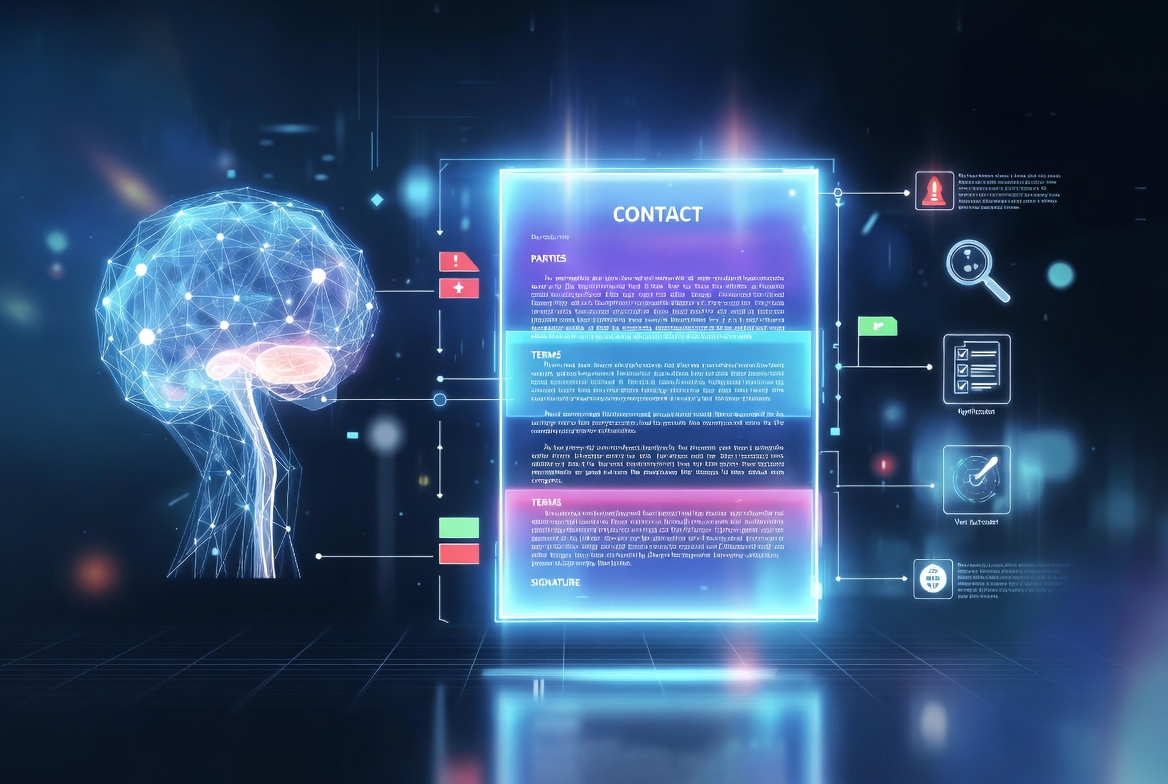
Your legal team just spent days reviewing one vendor agreement, while renewal deadlines slipped in parallel. That pattern is common in organizations still managing contracts through shared folders, inbox routing, and manual clause-by-clause checks.
AI contract review changes that first pass. It accelerates extraction, comparison, and risk flagging so legal and procurement teams can focus on high-impact decisions instead of repetitive scanning.
What Is AI Contract Review?
AI contract review uses AI technologies, including NLP and LLM-based extraction, to identify key clauses, compare them against policy standards, and highlight deviations.
At a practical level, it answers three operational questions:
- What does the contract actually say?
- How does it differ from approved standards?
- What should human reviewers evaluate first?
This should be understood as part of broader contract lifecycle management, not a standalone endpoint.
Why Manual Contract Review Breaks Down
Manual review typically fails at scale because contract volume grows faster than process maturity.
Common pain points:
- Scattered repositories and missing source-of-truth controls.
- Approval bottlenecks in email-based routing.
- Missed renewal and termination dates.
- Inconsistent risk interpretation across reviewers.
- Weak auditability across the full contract lifecycle.
How AI Contract Review Works Step by Step
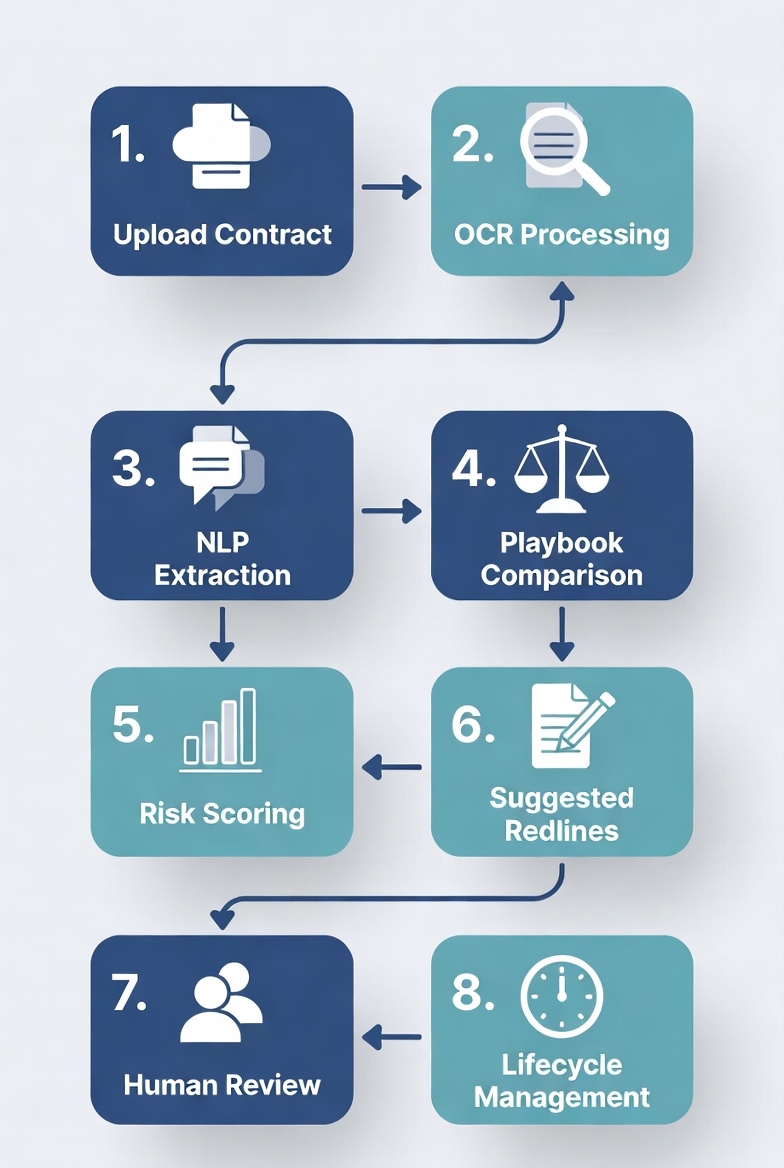
- Upload or sync contract files from controlled repositories.
- Run OCR and intelligent document processing to convert unstructured files into machine-readable text.
- Extract entities, clauses, obligations, and metadata through NLP and LLM analysis.
- Compare clause language against legal playbooks and approved fallback positions.
- Score risk and surface deviations by severity.
- Generate suggested redlines for reviewer consideration.
- Route to human reviewers for approval, rejection, or escalation.
- Push approved records into lifecycle workflows for obligation and renewal tracking.
AI Contract Review vs. AI Contract Management
| AI contract review | AI contract management | |
|---|---|---|
| Scope | Single-document analysis | End-to-end contract lifecycle governance |
| Primary output | Risk-flagged and redline-assisted review | Intake, approvals, obligations, renewals, and portfolio reporting |
| Typical users | Legal reviewers | Legal, procurement, sales, finance, operations |
| Strategic value | Faster first pass | Durable control across the full contract estate |
Review tools accelerate analysis, but portfolio-level control requires lifecycle governance. For a deeper strategic breakdown, see the contract lifecycle management guide.
In practice, most organizations adopt ai contract management once review-only workflows can no longer control renewals, obligations, and cross-team accountability.
Microsoft-Native AI Contract Management Architecture
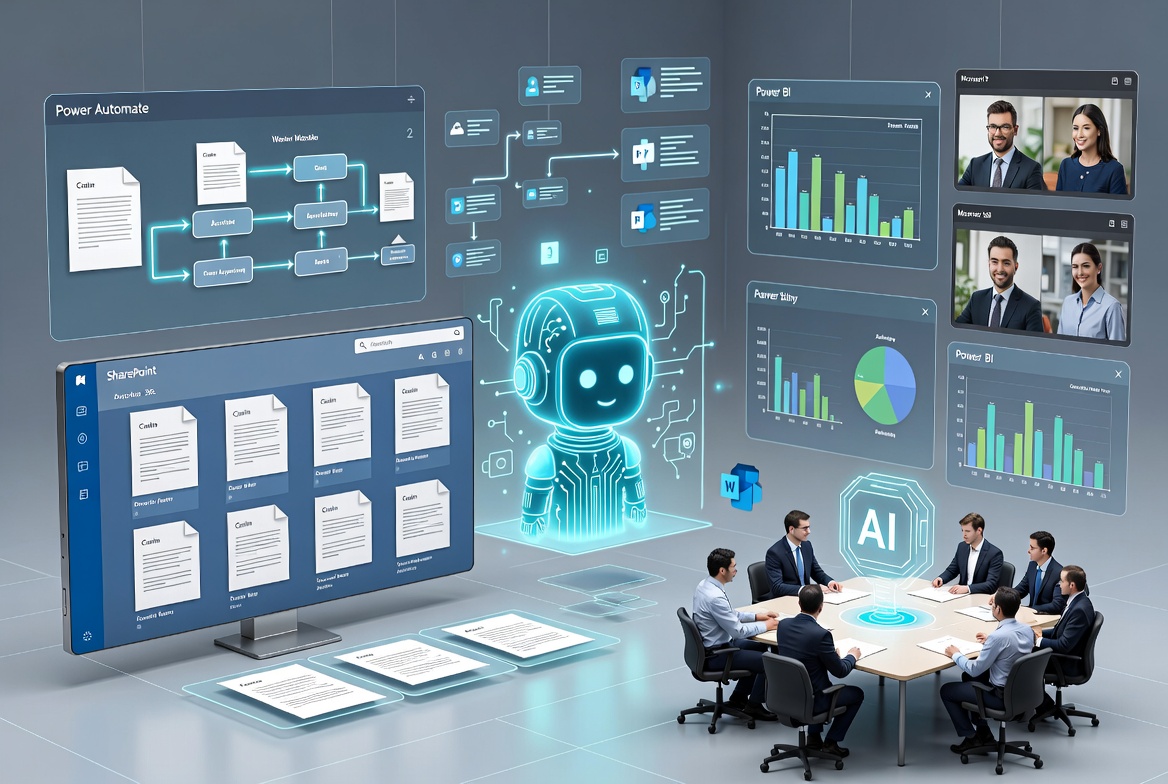
For Microsoft 365 organizations, implementation is strongest when built inside the existing collaboration and security stack:
- SharePoint as repository and versioned record source.
- Power Automate orchestration and approval routing.
- Dataverse and Dynamics integration for structured business context.
- Power BI for risk and workflow analytics.
- Purview for retention, governance, and compliance controls.
This pattern aligns naturally with document management system architecture and Power Platform workflow automation operations.
For Microsoft-native execution support, ARC SharePoint consulting services provide implementation depth across governance, workflows, and lifecycle controls.
What AI Can Catch Reliably
Well-configured systems can detect and classify:
- Auto-renewal and notice-period risk.
- Liability and indemnity deviations.
- Payment and escalation term changes.
- Termination and governing-law differences.
- Confidentiality and data-protection obligations.
- SLA and audit-right inconsistencies.
Common Challenges and How to Avoid Them
| Challenge | Why it happens | How to avoid it |
|---|---|---|
| Over-reliance on AI output | AI is treated as final decision authority | Keep human approval mandatory for high-risk contracts |
| Outdated playbooks | AI comparison baseline drifts from legal policy | Maintain and version playbooks continuously |
| Hallucination from general-purpose tools | Non-specialized models lack grounded extraction controls | Use purpose-built contract AI with auditable flows |
| Weak system integration | Review output is disconnected from lifecycle operations | Integrate review with CLM routing and obligation tracking |
| No operational ownership post-review | Teams optimize review speed but not lifecycle accountability | Assign owners and automate governance checkpoints |
Best Practices
- Start with one contract class and prove process stability.
- Define metadata requirements before scale.
- Keep human-in-the-loop controls explicit for risk thresholds.
- Track KPIs: review time, cycle time, renewal misses, exception volume.
- Build inside existing Microsoft governance boundaries.
- Update clause playbooks as policy and regulation evolve.
- Expand from review acceleration to lifecycle governance in phases.
How to Start: Practical Roadmap
- Map your current intake-to-renewal process.
- Define mandatory metadata and approval states.
- Build initial legal playbooks for key clause groups.
- Pilot on NDAs and standard vendor agreements.
- Integrate SharePoint, Power Automate, and reporting.
- Scale with objective KPI thresholds.
If you are evaluating vendors and build-vs-buy choices, see our CLM software comparison.
When to Move from AI Review to Full AI Contract Management
When missed renewals, fragmented ownership, or portfolio blind spots become material business risk, review alone is no longer sufficient.
At that point, transition to full contract lifecycle management with policy-driven routing, obligations tracking, and cross-functional reporting.
Future Trends
- Agentic workflows for triage and routing are increasing.
- Copilot-connected contract search and summarization is maturing.
- Legacy contract backlogs are being re-reviewed with AI extraction.
- Governance standards are tightening around transparency and oversight.
- Review and lifecycle management capabilities are converging.
Ready to Modernize Contract Operations?
If your team needs faster review plus real lifecycle governance, ARC can help you implement a Microsoft-native operating model.
Explore contract lifecycle management and build a scalable, governed process from first draft through renewal.
Frequently Asked Questions
What is AI contract review?
AI contract review is the use of artificial intelligence to read contracts, extract key terms, compare language to internal playbooks, flag risks, and suggest revisions — accelerating the first pass of legal review.
How does AI contract review work?
It typically follows a sequence: document upload, OCR/text processing, NLP-based extraction of clauses and terms, playbook comparison, risk scoring, suggested redlines, and final human approval.
What is the difference between AI contract review and AI contract management?
AI contract review analyzes individual contracts. AI contract management governs the entire lifecycle — intake, approvals, execution, obligation tracking, renewals, and reporting — with review as one component inside it.
Does AI contract review replace lawyers?
No. AI contract review accelerates the first pass of analysis, but human reviewers remain essential for judgment calls, especially on bespoke or high-risk agreements.
Is AI contract review accurate enough to trust?
AI contract review is generally reliable for extraction and playbook comparison on standard clause types, but hallucination risk exists. It should support, not replace, human review.
What contract clauses can AI review?
Common clauses include auto-renewal terms, liability caps, indemnification, payment terms, termination rights, governing law, confidentiality, data protection, SLAs, and audit rights.
Can AI review NDAs, MSAs, vendor contracts, and DPAs?
Yes. These are among the most common contract types for AI-assisted review, particularly for organizations piloting AI contract management for the first time.
How does AI flag risky contract language?
By comparing extracted clauses against pre-approved playbooks and fallback positions, then scoring deviations based on severity and business impact.
What is a contract playbook in AI contract review?
A playbook is a documented set of standard positions and acceptable fallback language for key clause types, which the AI uses as the benchmark for comparison.
How does AI redlining work?
Based on playbook comparisons, the system proposes revised or fallback language for clauses that deviate from standard positions, which a human reviewer then accepts, edits, or rejects.
Can Microsoft 365 be used for contract management?
Yes. Microsoft 365 tools including SharePoint, Power Automate, Teams, Dataverse, Dynamics 365, and Purview can support a full contract management architecture without adopting a separate platform.
How do SharePoint and Power Automate support contract approvals?
SharePoint serves as the document repository, while Power Automate routes contracts through defined approval workflows, sends notifications, and triggers next steps automatically.
How does Microsoft Purview support contract governance and retention?
Purview applies retention labels and records management policies to contracts, helping organizations meet regulatory and audit requirements around document lifecycle and retention.
What are the risks of using general-purpose AI for contracts?
General-purpose AI tools carry higher hallucination risk and typically lack grounded extraction, playbook comparison, and audit trail capabilities that purpose-built contract AI tools are designed around.
When should a company move from AI review tools to a full CLM system?
When contract volume, missed renewals, or lack of portfolio-wide visibility start creating real business risk, signaling that review alone is no longer enough to manage the process end to end.

Al Rafay Consulting
ARC Team
AI-powered Microsoft Solutions Partner delivering enterprise solutions on Azure, SharePoint, and Microsoft 365.
LinkedIn Profile